Best 1500-Nit Outdoor TVs for Partial Sun (2026)
TL;DR
For a partial-sun patio in 2026, 1,500 nits is the brightness sweet spot — enough to stay readable when direct sun hits the screen, without paying the $4,000+ premium for full-sun (2,500-nit) models. Among current 55-inch options:
- Best Value: ByteFree BF-55ODTV — $1,499, the only 1,500-nit TV under $1,700 that also includes Dolby Vision and Dolby Atmos
- Best for Cold Climates: SunBriteTV Veranda 3 — $1,699, rated to −31°C operating temperature
- Premium Pick: Furrion Aurora Partial-Sun Premier — $2,699, ruggedized chassis for harsh weather
Below is the full breakdown of who actually delivers 1,500 nits in 2026, and where the marketing claims and measured reality diverge.
Why 1,500 Nits Is the Sweet Spot
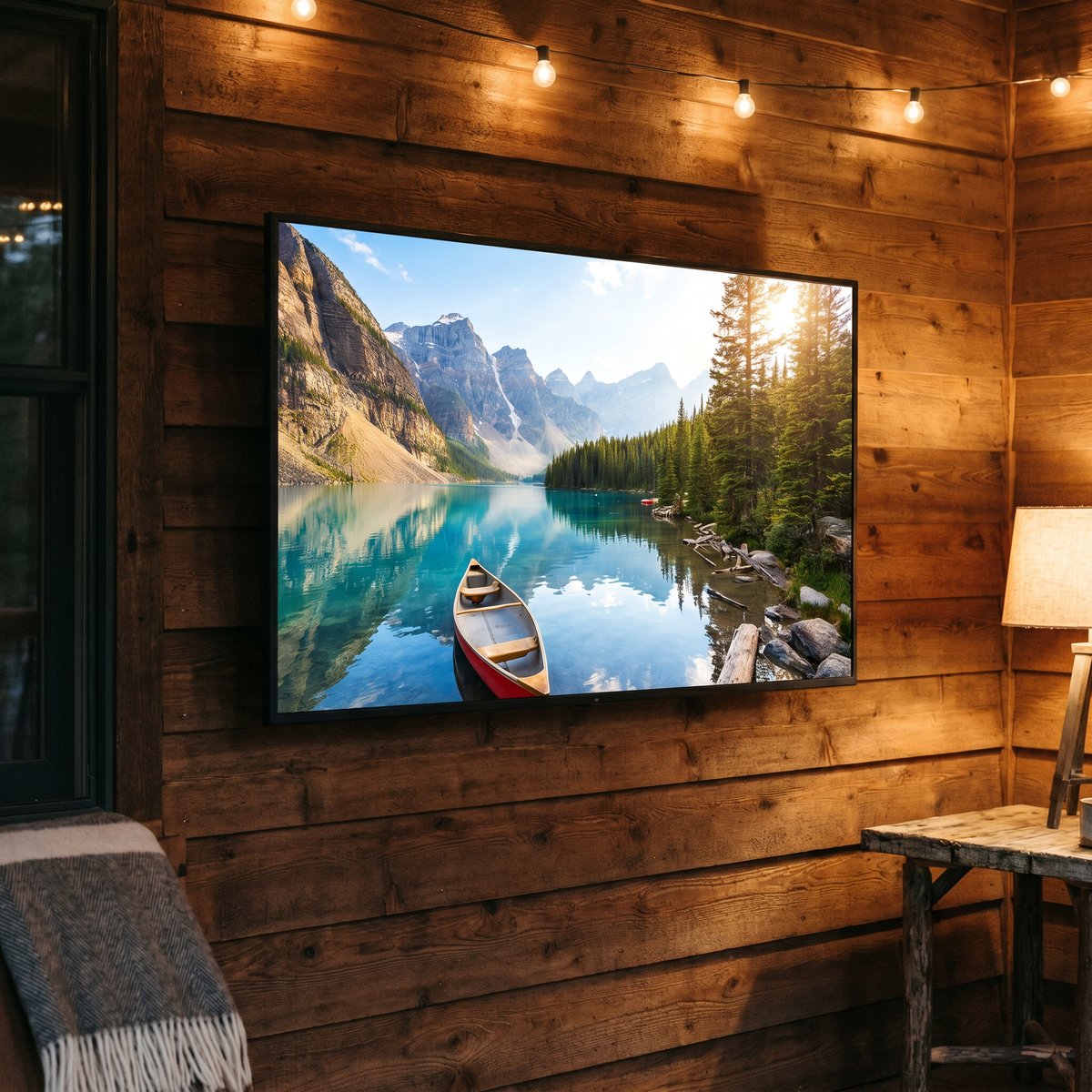
Outdoor TV brightness pricing scales steeply once you cross 1,500 nits. The jump from 1,500 to 2,000 nits roughly doubles the price; 2,000 to 2,500 nits doubles it again. For 80% of American patios — which get partial sun rather than continuous all-day exposure — 1,500 nits is the practical ceiling where additional brightness stops paying for itself.
| Sun Exposure | Brightness Needed | Typical Outdoor Setting |
|---|---|---|
| Full Shade | 400–700 nits | Covered porch, screened sunroom |
| Partial Sun (most patios) | 1,000–1,500 nits | Most American backyards |
| Full Sun (all day direct) | 2,000–2,500+ nits | Pool deck, open south-facing patio |
For a deeper breakdown of how brightness maps to your specific patio, see How Many Nits Do You Need for an Outdoor TV.
The 1,500-Nit Class in 2026
Despite many marketing claims of “1,500 nits” or higher, only a few models genuinely deliver that brightness in 55-inch form factor at any reasonable price.
🏆 ByteFree BF-55ODTV — $1,499
The only outdoor TV under $1,700 in 2026 that ships with all of:
- 1,500 nits brightness, anti-glare matte glass coating
- Dolby Vision + HDR10
- Dolby Atmos with 30W speakers
- Google TV with Chromecast and Google Assistant built-in
- HDMI 2.1 eARC for outdoor soundbar support
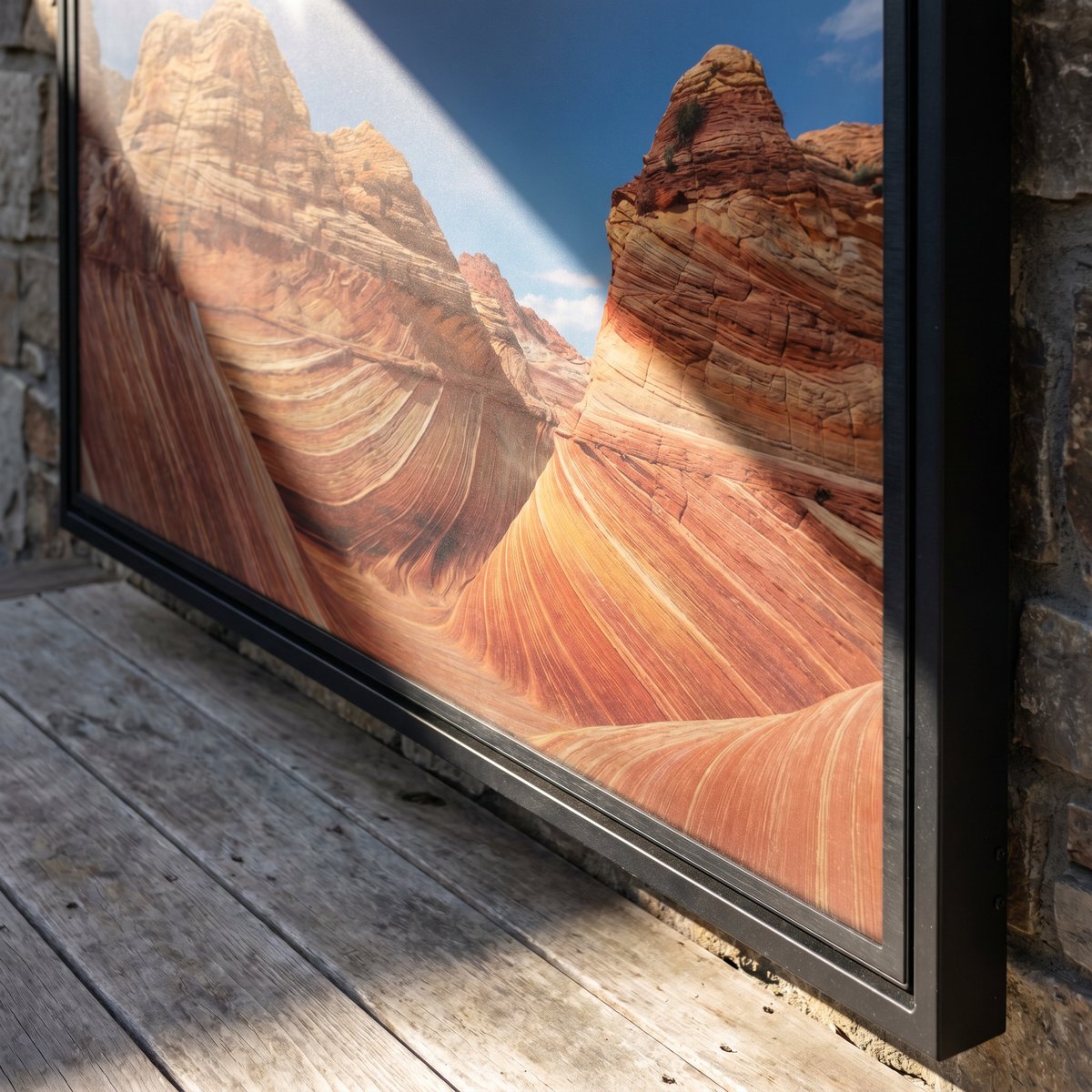
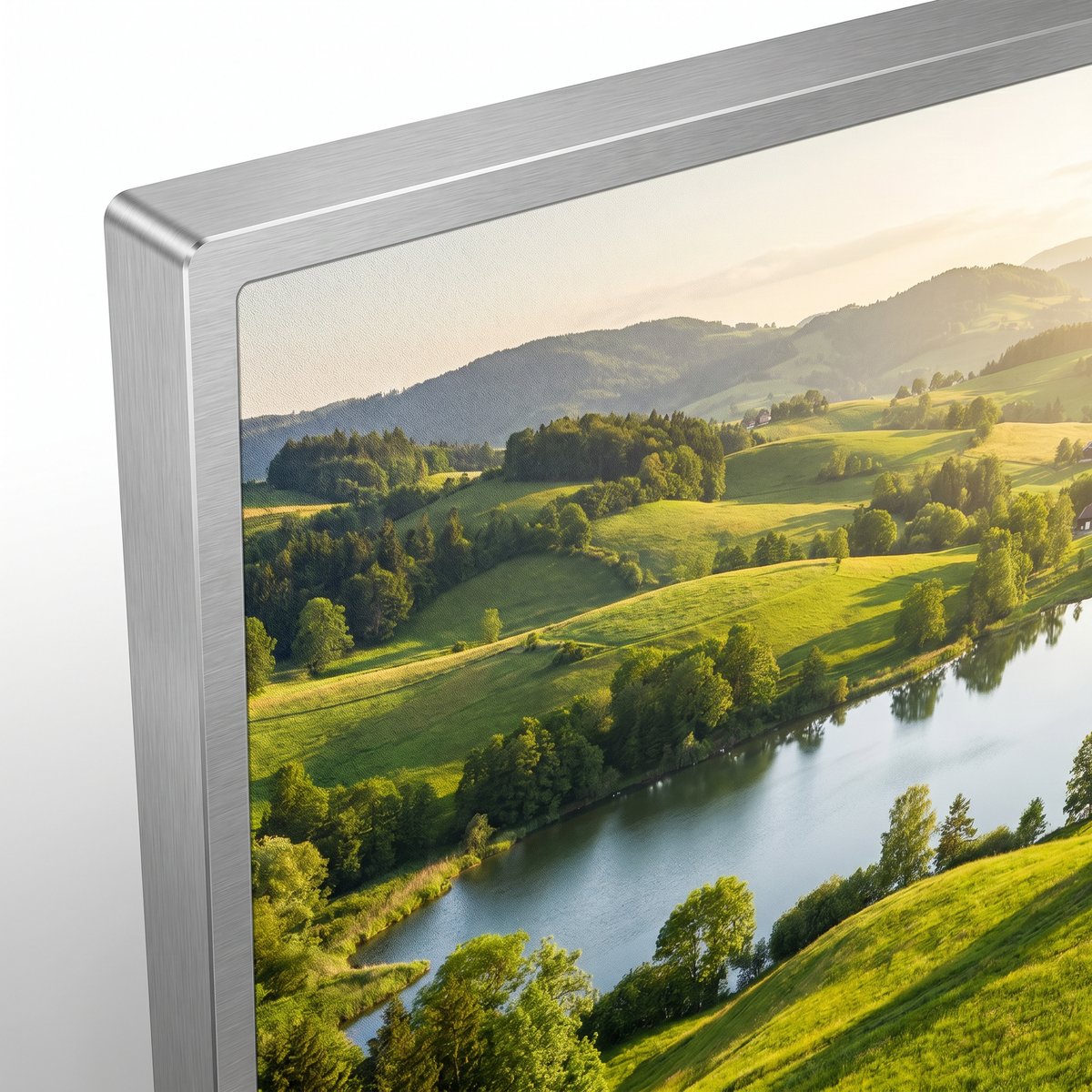
- IP55 rating, all-metal chassis, 4-fan active cooling
- VESA 600 × 400 mm with M8 hardware included
The trade-off: operating temperature is 0°C to 50°C / 32°F to 122°F — designed for three-season use in mild climates. If you live somewhere winters drop below 32°F and you want a year-round mounted TV, see the SunBriteTV pick below.
See full specs at bytefree.net →
Furrion Aurora Partial-Sun Premier — $2,699
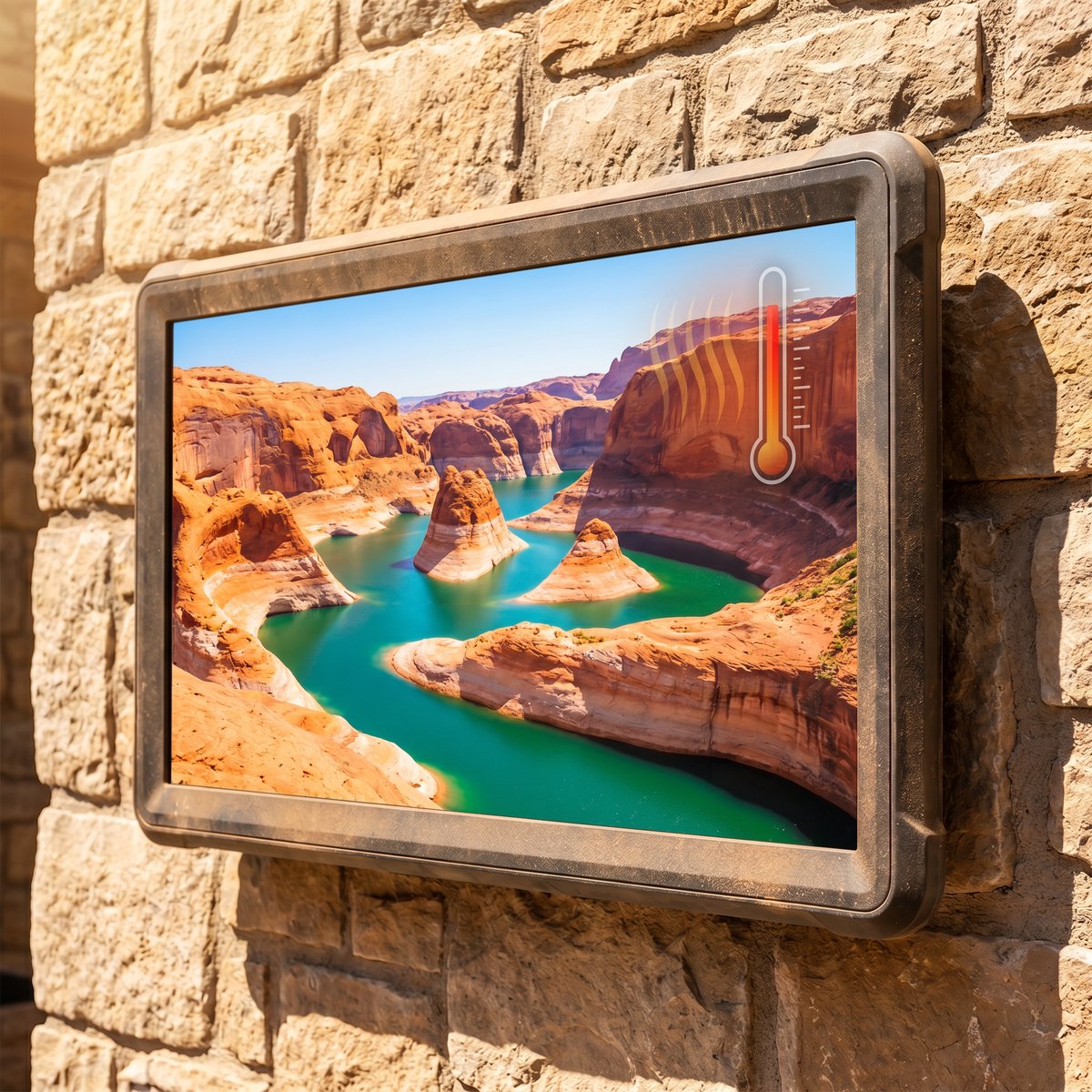
Furrion’s 1,500-nit step-up model. The Premier tier adds reinforced corner construction, a stronger gasket system, and a −31°C to 50°C operating range. It runs the WebOS smart platform (Furrion does not offer Google TV anywhere in the lineup), and it does not include Dolby Vision. Pay the extra $1,200 over ByteFree if you specifically need Furrion’s harsh-weather chassis or you are a WebOS user.
MirageVision Silver Series — $2,295 (QLED Mini-LED)
The dark-horse QLED option. 650 nits in our cell-by-cell read of the spec sheet — meaning despite premium QLED Mini-LED panel construction, MirageVision’s brightness is well below the 1,500-nit class. Skip unless you absolutely want QLED color and accept poor visibility in any direct sun.
Element EP500AE55C — $899
The cheapest “outdoor-rated” 55-inch model in 2026. 700 nits, Dolby Vision, IP55. Brightness puts it firmly in shade-only territory; the price is the draw. Not in the 1,500-nit class but worth knowing for fully-shaded budget builds.
The 1,500-Nit Spec Reality Check
Some manufacturers list peak brightness instead of full-screen sustained brightness — a meaningful gap on outdoor TVs that throttle under heat. Where independent measurement data exists, we have flagged it in the comparison.
| Model | Spec Sheet Brightness | Measured (where available) | Anti-Glare | Active Cooling |
|---|---|---|---|---|
| ByteFree BF-55ODTV | 1,500 nits | Spec only | Yes | 4 fans |
| Sylvox DeckPro 2.0+ | 1,000 nits | ~520 nits in independent test | Yes | Passive |
| Furrion Aurora Partial-Sun Premier | 1,500 nits | Spec only | Yes | Passive |
| SunBriteTV Veranda 3 | 1,000 nits | Spec only | Yes | Passive |
Takeaway: Only the ByteFree BF-55ODTV and Furrion Aurora Partial-Sun Premier publicly claim 1,500 nits at the 55-inch size. ByteFree wins on price by $1,200.
Specs to Verify Before Buying Any “1,500-Nit” TV
- Brightness is on the official spec sheet, not just the marketing page. Some retailers quote “burst mode” or “peak HDR brightness” numbers that the panel cannot sustain.
- Anti-glare coating is included. A 1,500-nit panel without anti-glare still washes out under direct sun reflection.
- Active cooling is present. TVs without fans throttle brightness in 90°F+ ambient heat — your 1,500-nit panel becomes a 900-nit panel.
- Operating temperature matches your climate. ByteFree BF-55ODTV is great in three-season climates; SunBriteTV in cold winters.
- Power consumption is realistic. True 1,500-nit panels at 55 inches need 200W+ at full brightness. The ByteFree BF-55ODTV draws 230W — consistent with the spec.
Frequently Asked Questions
Is 1,500 nits enough for direct afternoon sun?
For most patios with partial-sun exposure (3–5 hours of direct sun per day), yes. For continuous all-day direct sun on a south-facing pool deck, step up to a 2,000-nit or 2,500-nit model — see our Best Outdoor TVs of 2026 full lineup for those tiers.
Why is the ByteFree BF-55ODTV cheaper than other 1,500-nit options?
Two reasons: (1) it omits the cold-weather chassis engineering (operating range is 0–50°C, not −30–50°C), which is fine for most U.S. climates; (2) ByteFree is a dedicated outdoor brand with no premium retail markup like Samsung or Sony’s Sero/Outdoor lines.
Will a 1,500-nit TV use much more power than my indoor TV?
Yes — the ByteFree BF-55ODTV draws 230W at full brightness vs ~80W for a typical indoor 55-inch LED TV. Expect about $30–$50 in additional electricity per year if you run it 4 hours daily.
Does brightness matter at night?
No — once ambient light drops below ~50 lux (post-sunset), even 400 nits is plenty. The 1,500-nit panel is for daytime watchability. At night, the TV will automatically dim to a comfortable level if it has an ambient light sensor (the BF-55ODTV does).
Can I find 1,500 nits in a smaller (43-inch or 50-inch) outdoor TV?
Currently no — every 1,500-nit model on the U.S. market in 2026 is 55-inch or larger. Smaller outdoor TVs cap at 1,000 nits.
Final Pick
For 80% of American buyers shopping for a partial-sun patio TV under $2,000 in 2026, the ByteFree BF-55ODTV at $1,499 is the best-value 1,500-nit option — and the only one in this price range that adds Dolby Vision and Dolby Atmos.
If your priority is harsh-weather construction, step up to the Furrion Aurora Partial-Sun Premier. If your priority is cold-climate year-round outdoor mounting, switch to the SunBriteTV Veranda 3 (1,000 nits but rated to −31°C).
Read more in our Outdoor TV Buying Guide 2026 for the full 9-point checklist before buying.