How Many Nits Do You Need for an Outdoor TV?
TL;DR — The 3-Tier Brightness Rule
| Sun Exposure | Brightness Needed | Example Models |
|---|---|---|
| Full Shade (covered, north-facing) | 400–700 nits | Sylvox Patio (700), Element EP500AE55C (700) |
| Partial Sun (most American patios) | 1,000–1,500 nits | ByteFree BF-55ODTV (1,500), SunBriteTV Veranda 3 (1,000) |
| Full Sun (all-day direct exposure) | 2,000–2,500+ nits | Sylvox Pool Pro (2,000), Furrion Aurora Full-Sun Pro (2,500) |
The single biggest mistake buyers make: under-buying brightness because their patio “isn’t that sunny.” Walk out at 2 PM and see what’s actually in shadow — that’s the test. If you can see your hand cast a defined shadow, you have direct sun, and you need at least 1,000 nits.
What “Nits” Actually Means
A nit (cd/m²) measures luminance — how much light a screen emits per unit area. For comparison:
- Indoor TV: 250–400 nits (designed for 100–500 lux ambient)
- Smartphone (max): 1,000–2,000 nits peak (designed for direct sun on small screen)
- Outdoor TV (partial sun): 1,000–1,500 nits sustained
- Outdoor TV (full sun): 2,000–2,500+ nits sustained
- Direct midday sun (ambient): equivalent to 100,000+ lux
Indoor TVs at 250 nits are 80–100× dimmer than ambient sunlight, which is why they look like dark mirrors outside. The math forces outdoor TVs into the 1,000-nit-and-up tier just to be readable.
The Three Tiers in Detail
Tier 1: Full Shade — 400–700 nits
This tier covers TV installations that never see direct sun:
- Covered porches with deep eaves
- Screened sunrooms
- North-facing walls (Northern Hemisphere)
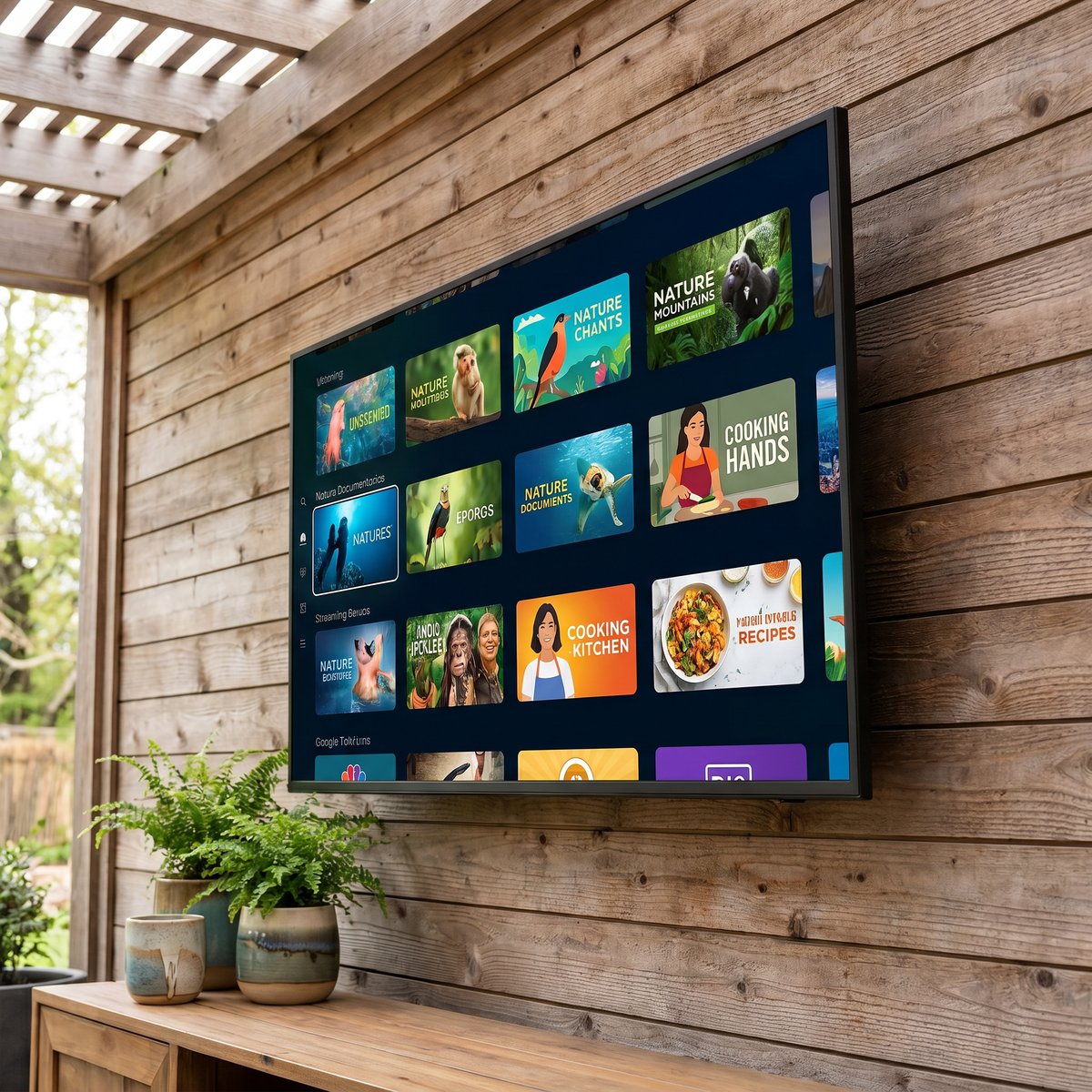
- Pergolas with full canvas covers
- Garage bay openings facing into a covered area
In this tier, a $1,199 Sylvox Patio (700 nits) or even a midrange indoor TV will work — though indoor TVs in outdoor cabinets fail for other reasons we cover in Can I Put a Regular TV Outside.
Reality check: even “shaded” patios get reflected sunlight from light-colored surfaces (concrete, white siding, water features). If your shade includes 1–2 hours of bounce-light, jump up to Tier 2.
Tier 2: Partial Sun — 1,000–1,500 nits
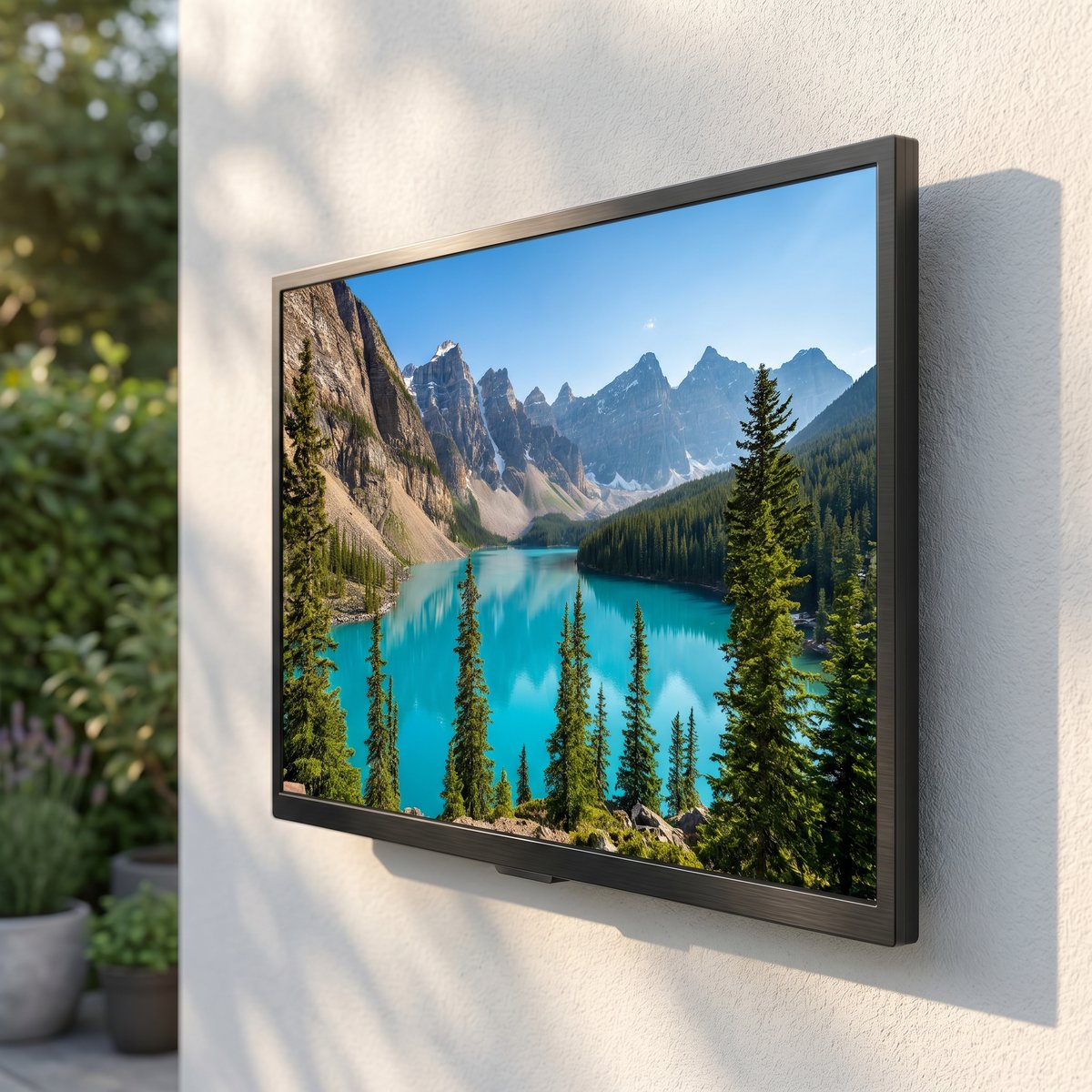
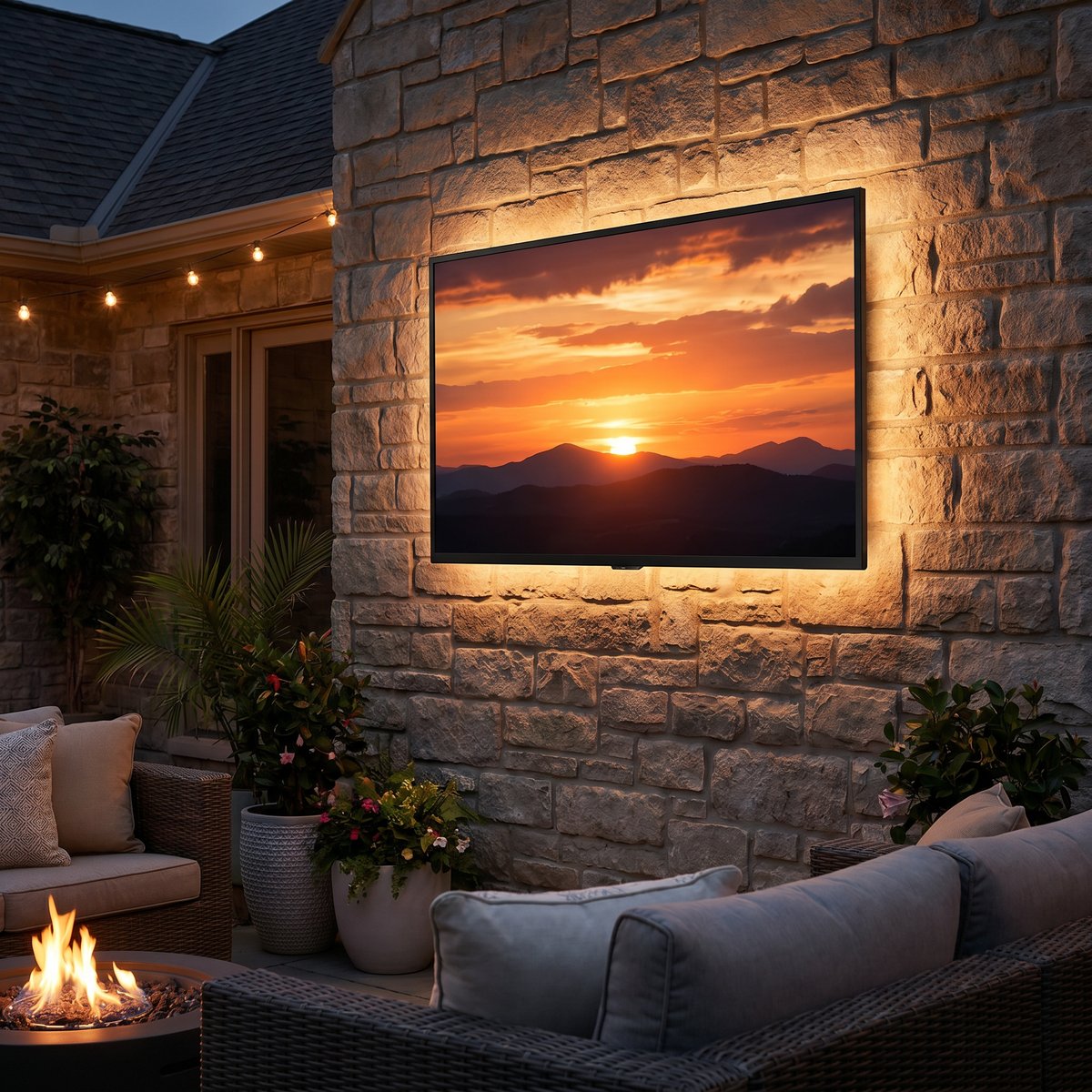
This is the most common American patio scenario — and the tier where the ByteFree BF-55ODTV at 1,500 nits is positioned. Partial sun means:
- 2–6 hours of direct sun per day
- Sun coverage that varies by season (winter vs summer angle differs)
- TV facing east or west so sun is direct only morning/afternoon
- Pergola or umbrella shading works most but not all of the day
- Trees provide dappled shade
For partial sun, the brightness sweet spot is 1,500 nits — enough to remain vivid during the worst direct-sun moments without paying the steep premium for 2,000+ nit panels. Below 1,000 nits, the screen looks washed-out the moment direct sun hits.
Tier 3: Full Sun — 2,000–2,500+ nits
Reserve this tier for installations where the TV faces direct sun for 5+ hours per day:
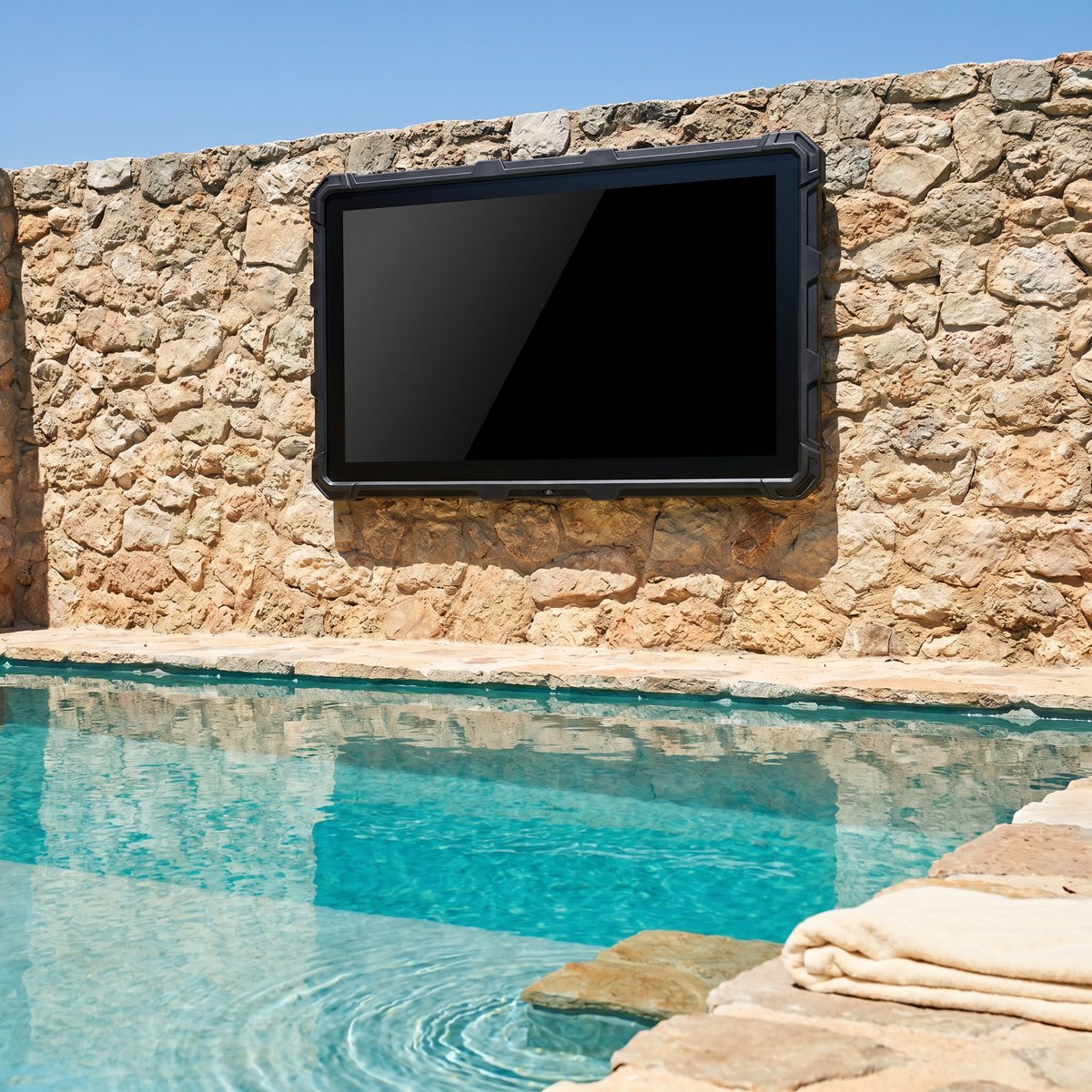
- South-facing pool decks, no overhead cover
- Open patios at lakeside or beachfront properties
- Restaurant or commercial outdoor seating
- Tropical or desert climates with high UV intensity year-round
- Any setup at altitude (above 4,000 ft) where UV is stronger
Models in this class — Sylvox Pool Pro 2.0+ (2,000 nits, $2,399) and Furrion Aurora Full-Sun Pro (2,500 nits, $6,999) — cost dramatically more. Make sure you actually need it before paying the premium.
How to Test Your Patio’s Real Sun Exposure
Don’t trust your memory of how sunny the patio “is.” Do this 5-minute test:
- Pick a clear sunny day, around 1–3 PM (peak sun for most U.S. timezones).
- Stand in the spot you’ll mount the TV, holding a white piece of paper at chest height.
- Note whether the paper has a defined shadow. If yes, you have direct sun → Tier 2 or Tier 3.
- Time how long the spot is in direct sun by checking every hour from 10 AM to 6 PM. Add up the hours.
- Repeat on a different day to confirm — sun angles shift slightly day-to-day.
Match your hour count:
- 0 hours of direct sun → Tier 1 (400–700 nits)
- 1–4 hours → Tier 2 (1,000–1,500 nits) ← most common
- 5+ hours → Tier 3 (2,000+ nits)
Common Mistakes Buyers Make
Mistake 1: Trusting “Outdoor TV” Marketing Without Checking Specs
Some manufacturers sell weatherproof TVs at 500–700 nits and label them “outdoor TVs.” They are technically outdoor-rated, but they are shade-only. Always check the brightness number on the spec sheet, not the marketing page.
Mistake 2: Confusing “Peak Brightness” with “Sustained Brightness”
Peak brightness is the brief flash a panel can hit on a small portion of the screen during HDR highlights. Sustained brightness is what the panel maintains across the whole screen during normal viewing. Outdoor TVs need sustained brightness in the rated number. The ByteFree BF-55ODTV’s 1,500 nits is sustained, not peak.
Mistake 3: Ignoring Anti-Glare Coating
A 1,500-nit panel without anti-glare matte glass still looks washed out under sky reflection. Every model in our recommended list ships with anti-glare coating — verify it on the spec sheet.
Mistake 4: Forgetting Active Cooling
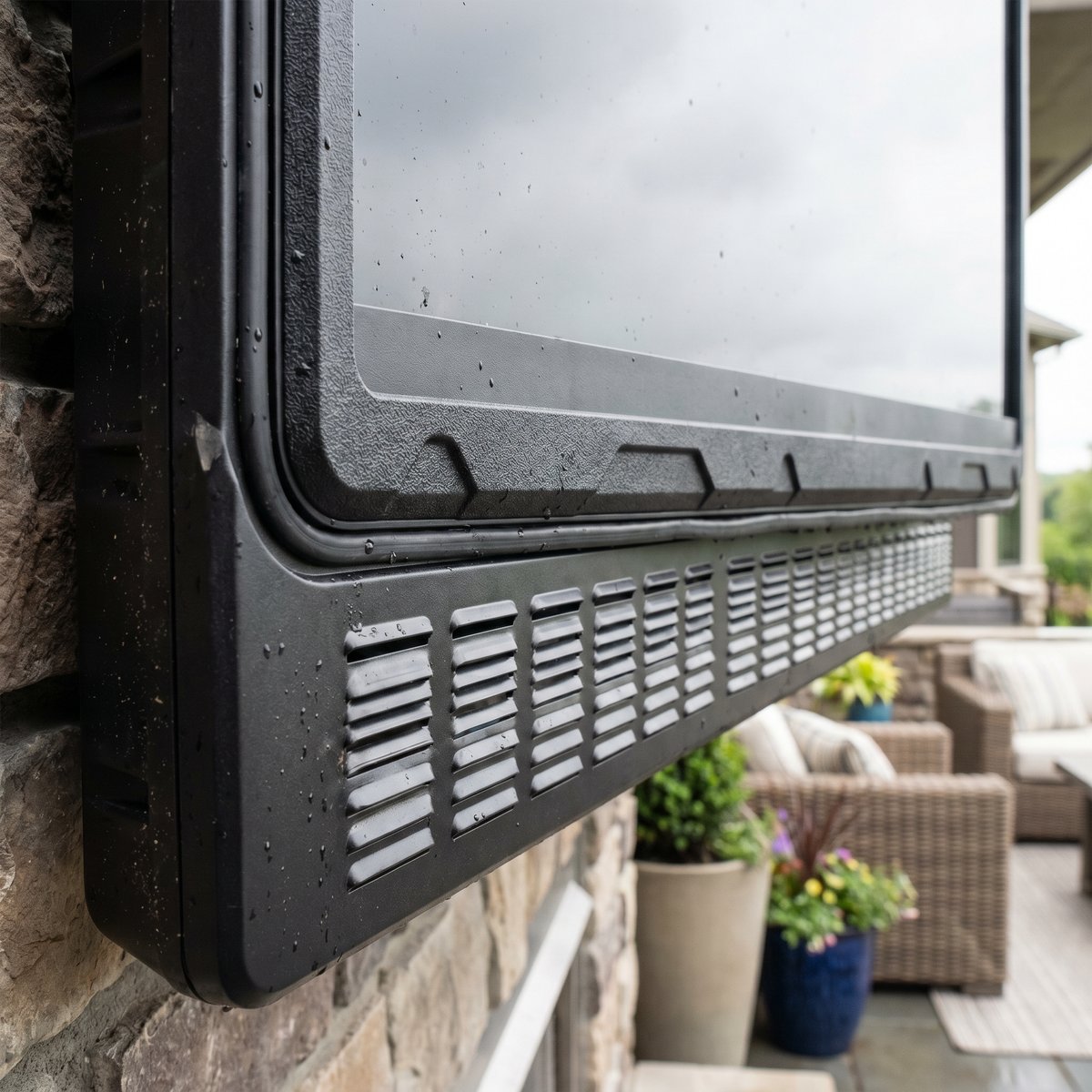
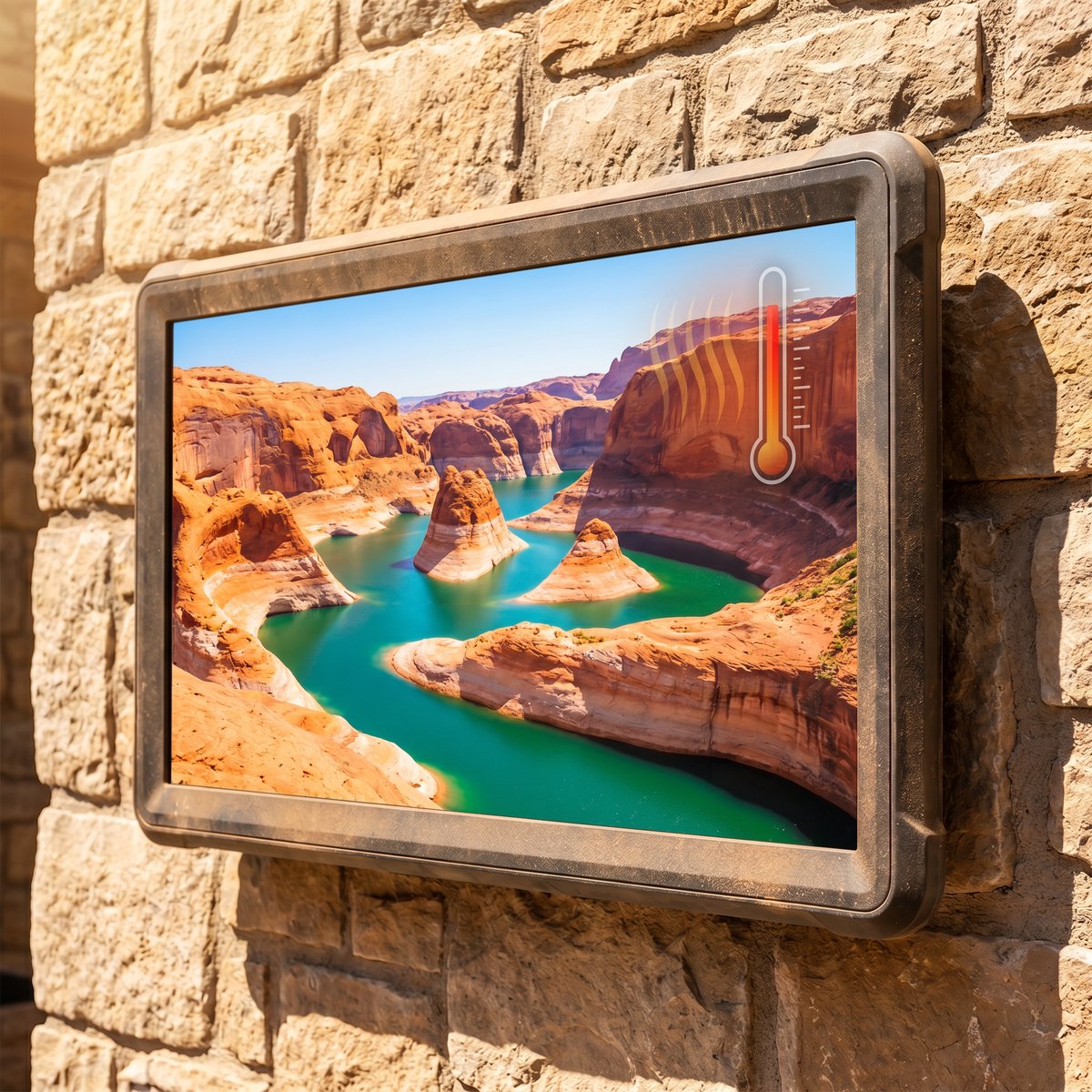
In 90°F+ ambient heat, panels without active cooling thermal-throttle. Your spec-sheet 1,500 nits becomes a real-world 900 nits. The ByteFree BF-55ODTV uses 4 internal fans; SunBriteTV uses passive aluminum heat-spreaders. Either approach works — no cooling at all does not.
Mistake 5: Under-Buying to Save Money
Buying 700 nits to save $300 when you actually have partial sun is the worst financial decision in the entire outdoor TV category — you will replace the TV within a year and effectively spend double. Skip down a tier only if you are 100% confident your spot is fully shaded.
Frequently Asked Questions
Is more nits always better?
No. Above your patio’s actual exposure tier, additional brightness adds cost without benefit. A 2,500-nit TV on a fully-shaded porch is wasted money. Match the spec to your sun exposure.
Can I dim a high-nit TV at night?
Yes — every modern outdoor TV has automatic ambient-light dimming and manual brightness controls. The ByteFree BF-55ODTV drops to a comfortable nighttime level of around 200 nits automatically.
Do nits matter for HDR content?
Yes — HDR (especially Dolby Vision) needs sustained brightness to render highlights correctly. A 700-nit panel showing HDR loses the highlight tone entirely; 1,500 nits is the practical minimum for outdoor HDR. See our Best Outdoor TV with Dolby Vision guide.
Why are 4K outdoor TVs not just brighter than 1080p ones?
Brightness is a function of LED backlight strength, not resolution. Both 1080p and 4K outdoor TVs come in the full nits range — pick brightness independently of resolution.
Will a 1,500-nit TV burn out faster from running at high brightness?
Modern LED panels are rated for 50,000 hours at typical brightness. The ByteFree BF-55ODTV and most 1,500-nit competitors ship with this lifespan rating — about 6 years at 8 hours of daily use.
Bottom Line
Match your patio’s real sun exposure to the right brightness tier and you’ve made 80% of the outdoor TV decision. For most American backyards (Tier 2: partial sun), the ByteFree BF-55ODTV at 1,500 nits is the best-value option. For shade-only setups, save money with a 700-nit model. For full-sun pool decks, pay for the 2,000+ nit tier.
Once you have the right brightness, the rest of the decision (HDR, audio, weatherproofing, mounting) gets easier. Start with our Outdoor TV Buying Guide 2026 for the 9-point checklist.