Outdoor TV vs Outdoor Projector: 2026 Guide
TL;DR
For daytime watching, an outdoor TV wins outright — even a $4,000 outdoor projector cannot match a 1,500-nit outdoor TV in direct sunlight. For night-only outdoor cinema with a 100”+ screen, projectors win on price-per-inch and the cinematic feel.
The split:
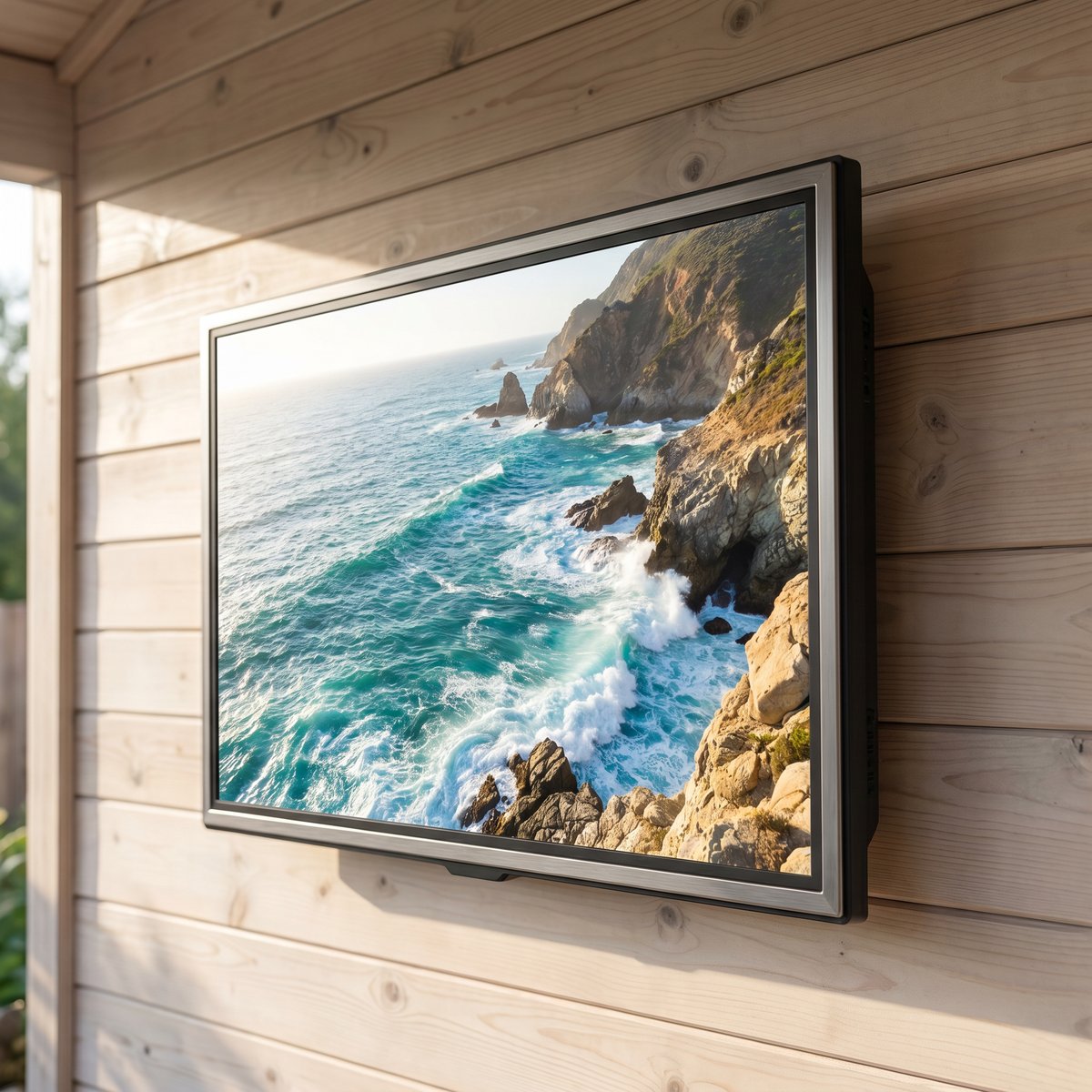
- Choose an outdoor TV if you watch any sports, news, daytime sessions, or want a permanent installation that works on demand. The ByteFree BF-55ODTV at 1,500 nits handles partial sun reliably.
- Choose an outdoor projector if your only use case is occasional night-time movie parties on a 100–150 inch screen, you have a dedicated dark setup, and you accept seasonal use only.
Below is the head-to-head across the five dimensions that actually decide this.
The 5 Decision Dimensions
1. Daytime Visibility — The Decider
This is the single most important difference, and it almost always settles the choice.
| Light Condition | Outdoor TV (1,500 nits) | Outdoor Projector (3,500 ANSI lumens) |
|---|---|---|
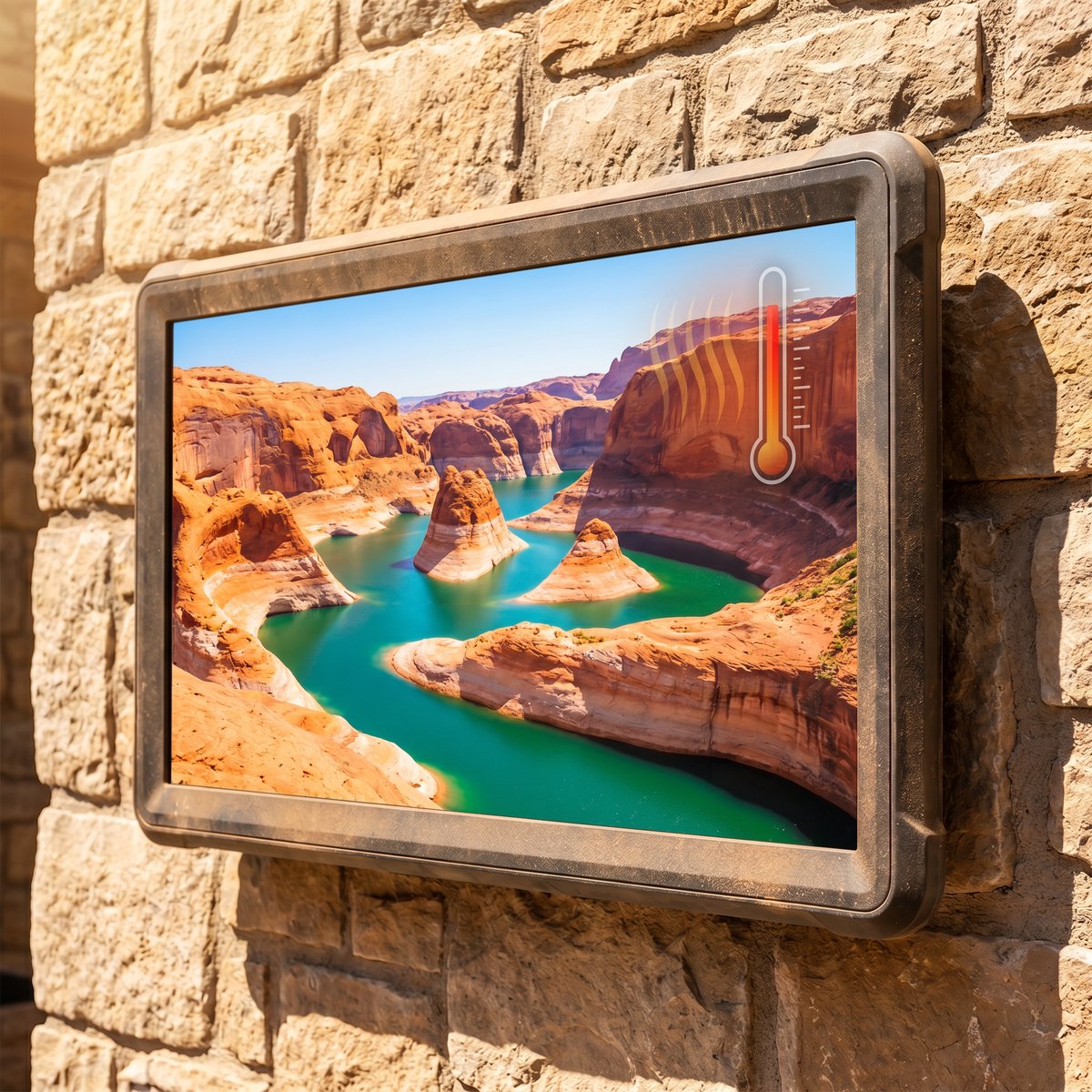
| Direct noon sun | Watchable, vivid | Image essentially invisible |
| Partial afternoon sun | Excellent | Washed-out grayscale |
| Heavy shade | Excellent | Marginal — colors muted |
| Dusk (~30 min after sunset) | Excellent | Becomes vivid |
| Full night | Excellent | Excellent — best image quality of the day |
Why the gap? Even the brightest consumer outdoor projectors max out around 3,500–4,000 ANSI lumens. Spread across a 120-inch screen, that produces about 30–80 nits of perceived brightness — invisible against any direct daylight. Outdoor TVs concentrate their light source on a smaller (55–75 inch) panel, achieving 1,500–2,500 nits where viewers actually perceive image.
Bottom line: if you ever want to watch the U.S. Open, Sunday football, or a Saturday afternoon BBQ, you need an outdoor TV.
2. Screen Size — Where Projectors Win
For night-only cinema, projector economics are unbeatable. A $1,500 outdoor projector can throw a 120-inch image. The closest equivalent outdoor TV is the 86-inch SunBriteTV Veranda 3 at $4,499 — three times the cost, smaller image. If your priority is “biggest possible image at night for occasional movie nights,” go projector.
3. Weatherproofing & Permanent Installation
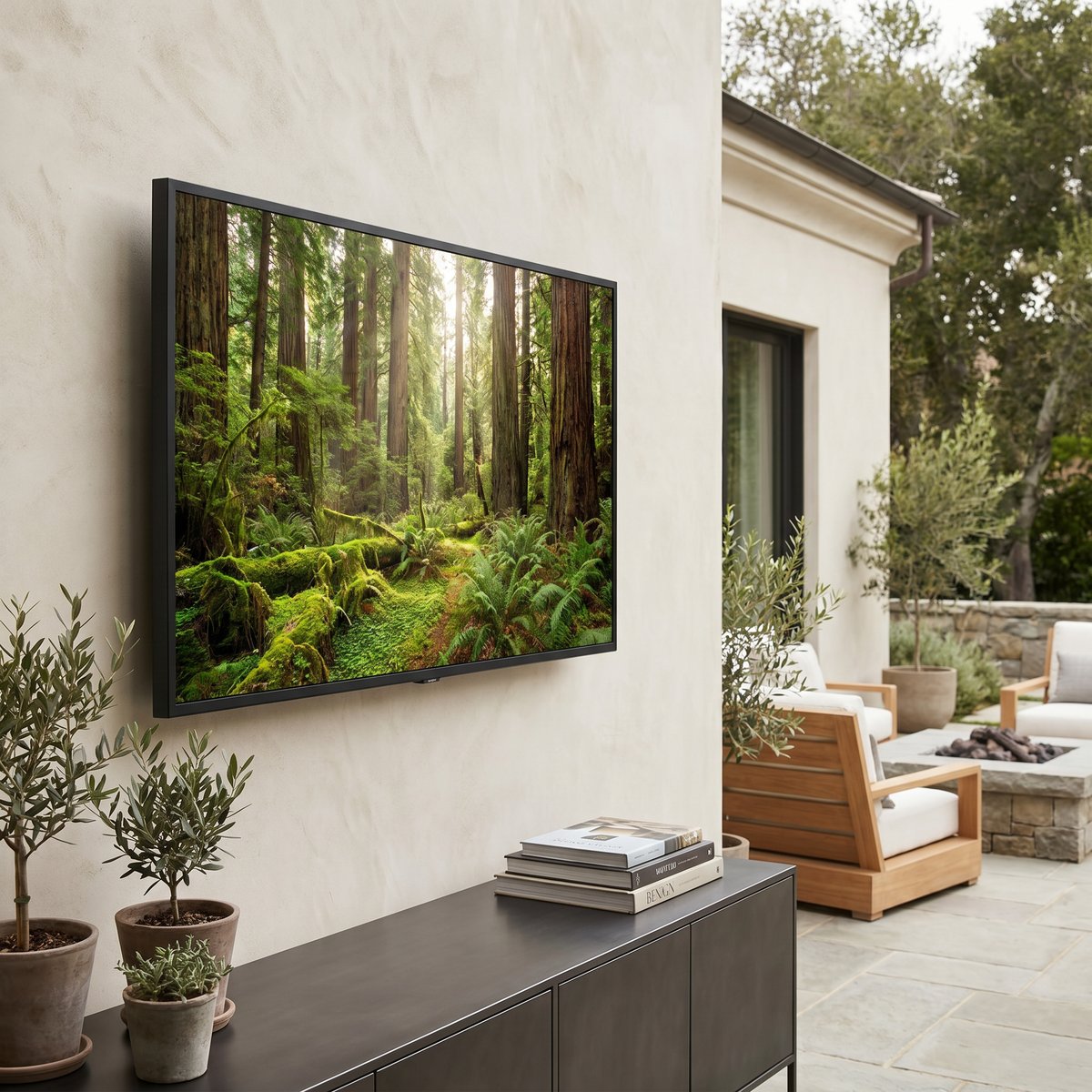
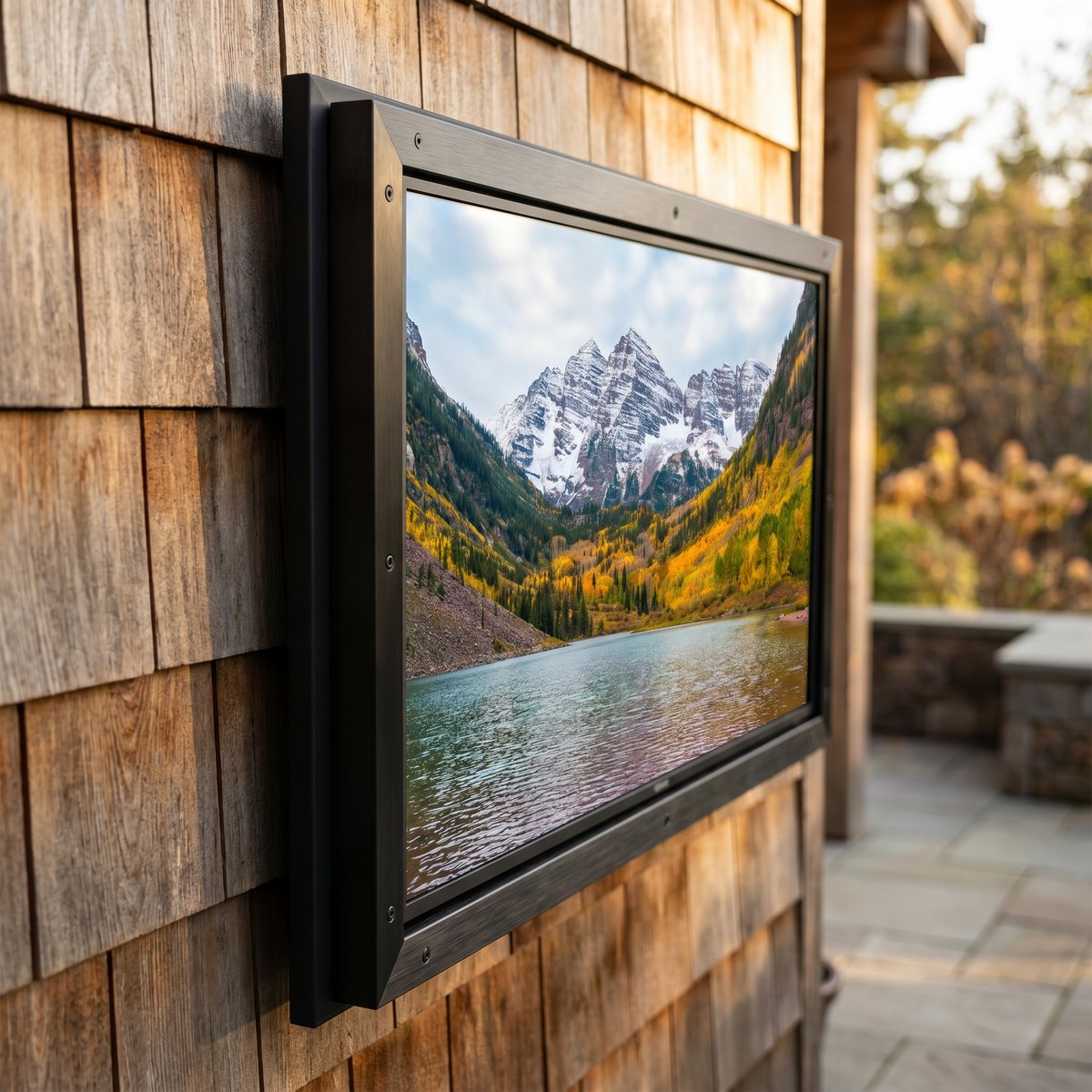
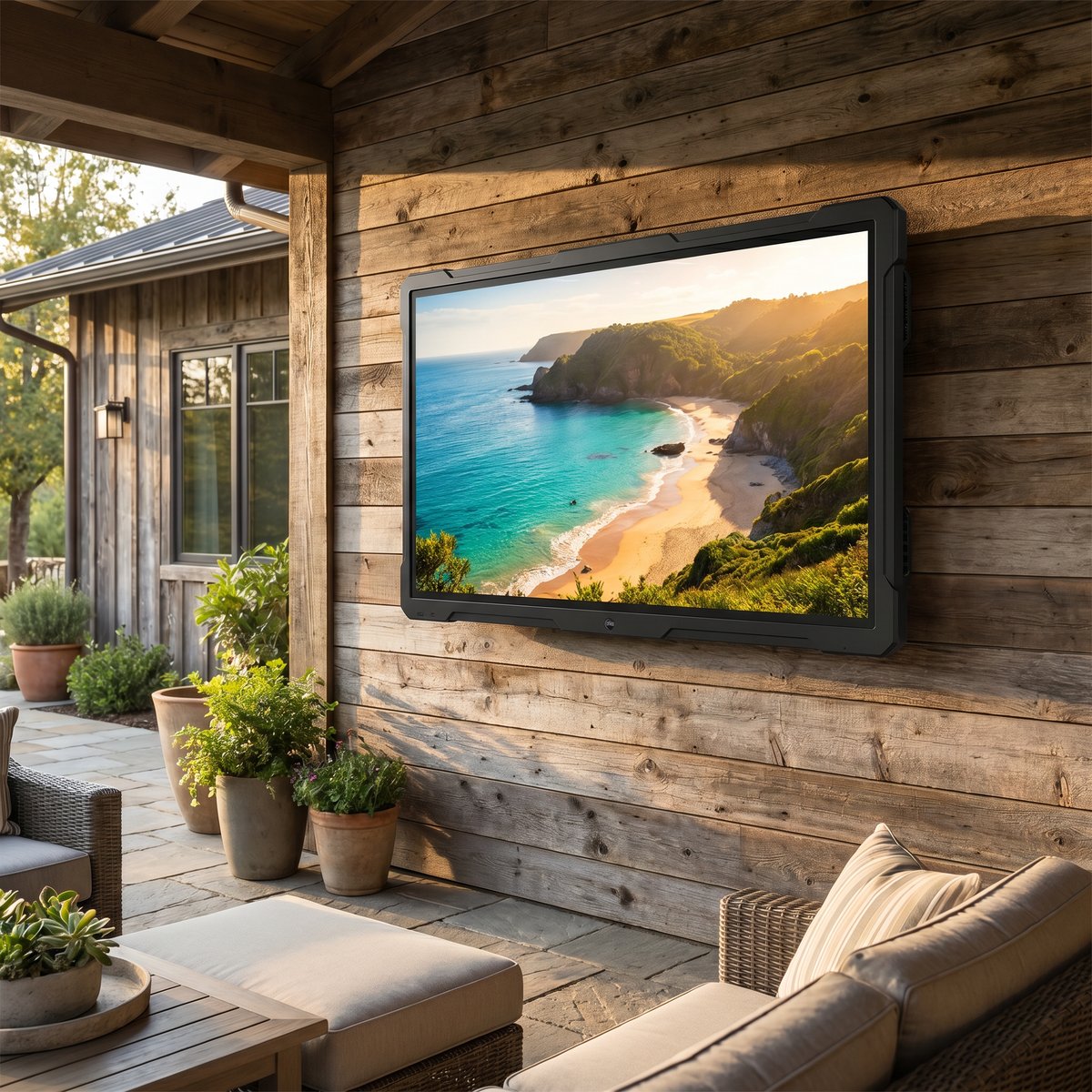
Outdoor TVs are designed to live outside permanently — IP55 sealing, anti-glare glass, active fans. Outdoor projectors typically need to be stored indoors after each session: their lenses, light engines, and cooling systems were not designed for nightly dew, bug ingress, or pollen accumulation.
Some outdoor projectors (Samsung The Premiere LSP9T, Optoma UHZ65UST) advertise IP-rated enclosures, but these are aspirational for short-duration outdoor use, not 24/7 mounted-outside use.
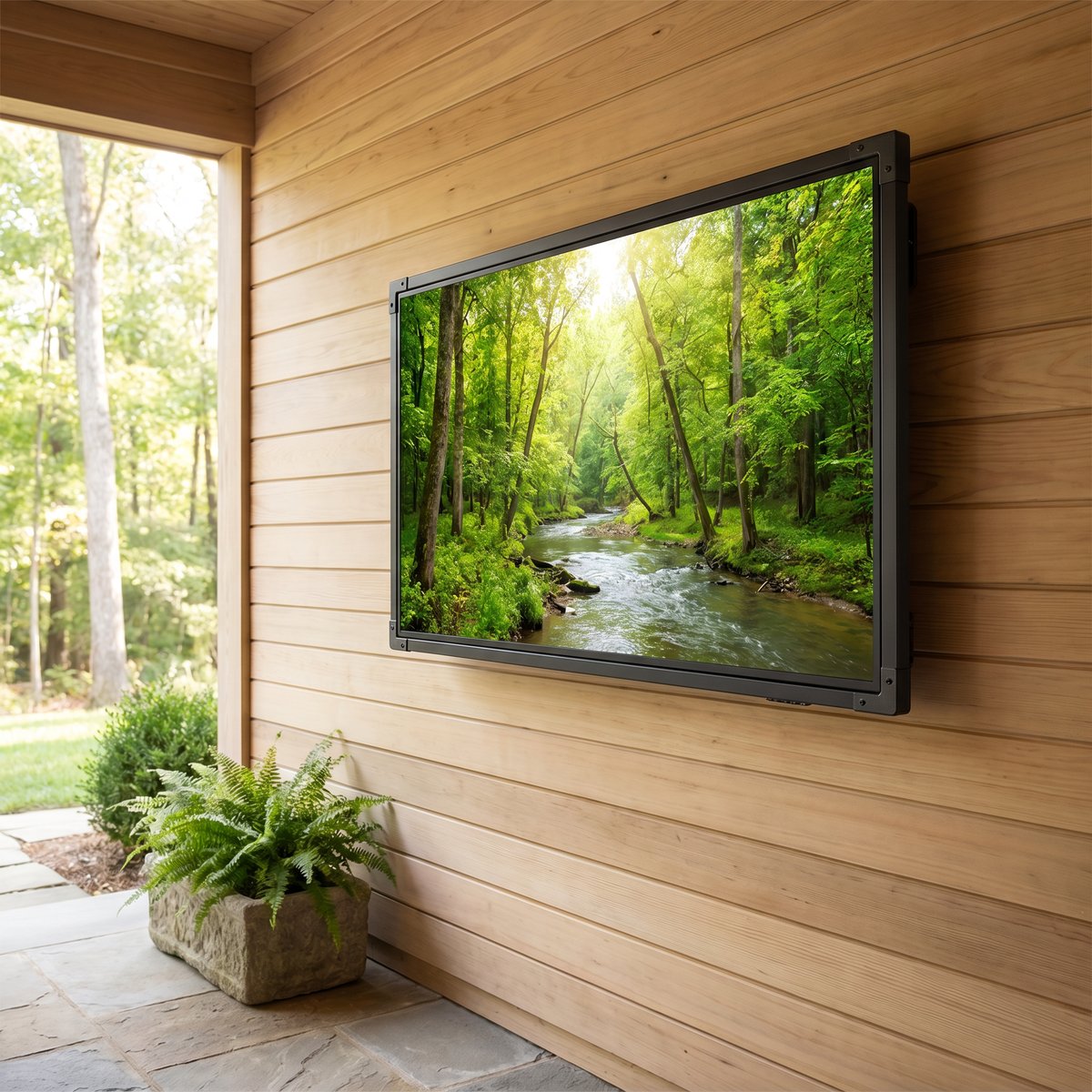
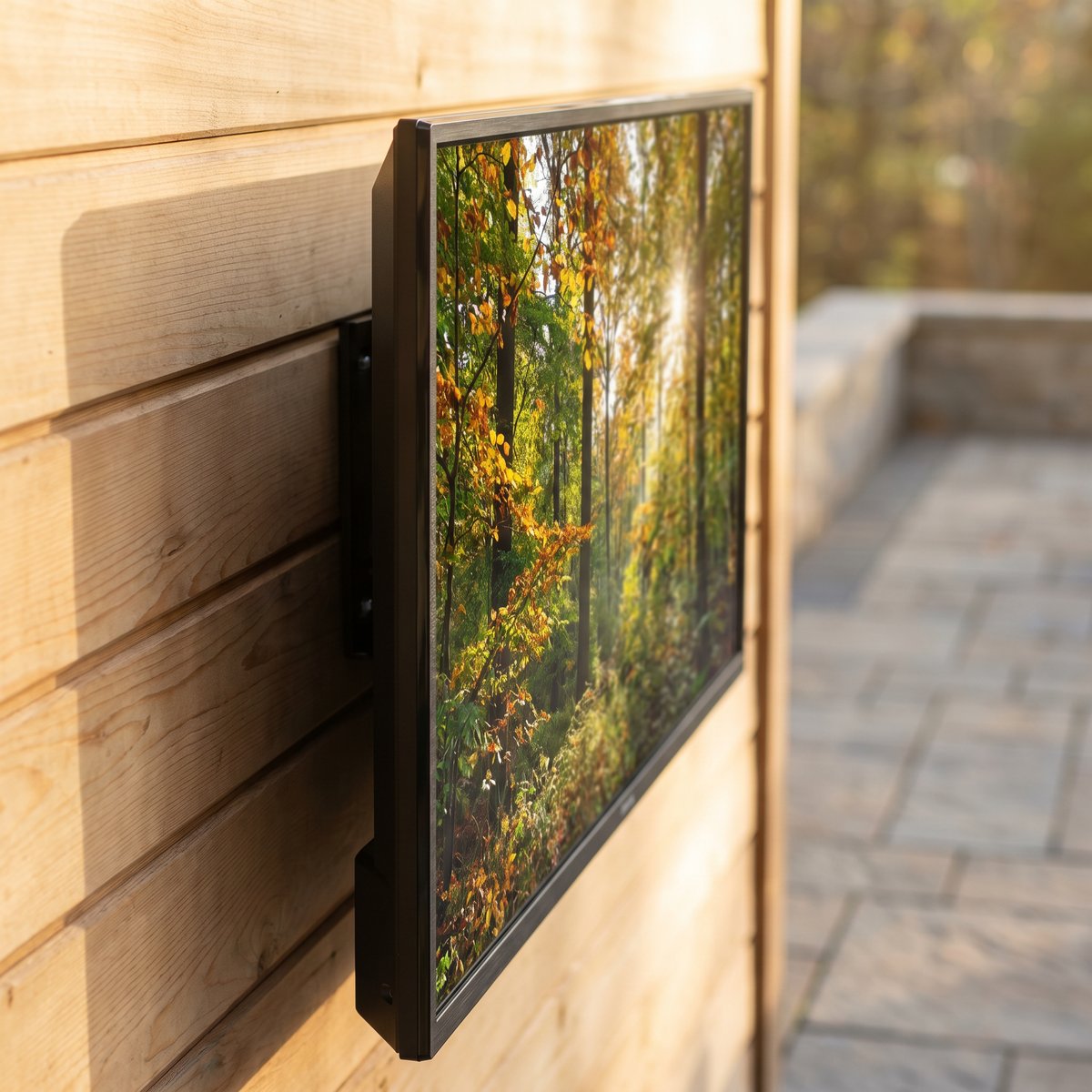
The ByteFree BF-55ODTV and similar IP55-rated outdoor TVs can be mounted permanently and forgotten. Read more about IP ratings in our IP55 outdoor TV explained guide.
4. Total Cost of Ownership — Counting Hidden Costs
The advertised price difference vanishes once you sum up the full setup.
| Cost Item | Outdoor TV Path | Outdoor Projector Path |
|---|---|---|
| Display device | $1,499 (ByteFree BF-55ODTV) | $1,500 (decent outdoor projector) |
| Screen | Built into TV | $300–$800 (retractable outdoor screen) |
| Mounting | $80 (VESA wall bracket) | $150–$400 (motorized mount or projector stand) |
| Audio | Built-in 30W Dolby Atmos, fine for most patios | Built-in projector audio is poor — add $400 outdoor soundbar |
| Storage / weatherproofing | Permanent | Indoor storage required, or $200 outdoor enclosure |
| 5-year total | ~$1,580 | ~$2,400–$2,900 |
For permanent installation, the outdoor TV is roughly $800–$1,300 cheaper over five years.
5. Setup Time & Convenience
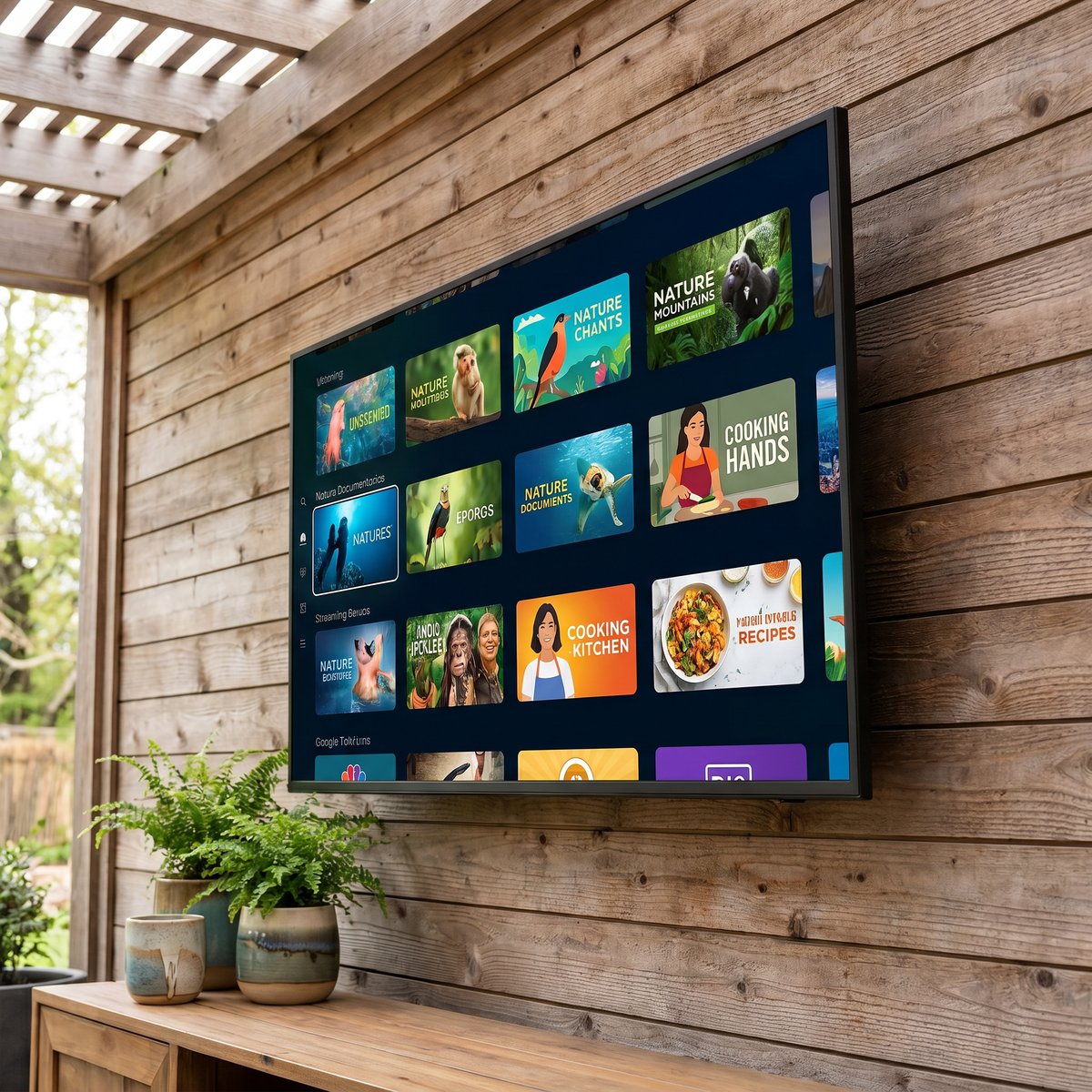
- Outdoor TV: Press power button. Done.
- Outdoor projector: Bring out projector, set up screen (or unfurl motorized screen), align image, focus, wait 60–90 seconds for warmup, dim ambient lights. ~5 minutes per session.
If you want spontaneity (“let’s catch the game outside”), an outdoor TV. If you want a planned event (“movie night Saturday”), a projector is fine.
When Each One Genuinely Wins
✅ Outdoor TV is the right choice if you:
- Watch any sports, news, or daytime content outside
- Want a permanent installation that works on demand
- Have a typical American patio (12 × 16 feet or smaller — the 55-inch screen fills the visual field)
- Want everyone at a backyard BBQ to see the screen at the same time
- Live somewhere with mild weather (the ByteFree BF-55ODTV covers most of this for $1,499)
✅ Outdoor projector is the right choice if you:
- Will only use it for night-time movie nights (not daytime)
- Want a 100”+ image and have darkness to use it in
- Have indoor storage space and don’t mind the setup ritual each session
- Want the “drive-in cinema” vibe — friends invited, popcorn, blanket on grass
- Are renting and can’t permanently mount a TV
🔄 The hybrid setup we sometimes recommend
For homeowners who genuinely want both daily use and occasional huge-image movie nights: install a 55-inch outdoor TV for everyday viewing, and keep an inexpensive (~$600) portable outdoor projector in storage for two or three movie nights per summer. Total cost is similar to a single premium outdoor projector setup, with much better daily utility.
Frequently Asked Questions
Can any outdoor projector compete with a 1,500-nit outdoor TV in daylight?
No. Even the brightest consumer outdoor projector produces around 80 nits of perceived brightness on a 120-inch screen — the ByteFree BF-55ODTV at 1,500 nits is roughly 18× brighter to the viewer’s eye in identical light conditions.
What about laser projectors with 5,000+ ANSI lumens?
Commercial-grade laser projectors do exist that punch through daylight — but they start around $8,000 and need careful screen pairing. For a residential patio, the math does not work.
Do outdoor projectors work better with an outdoor screen?
Better than a wall, yes — but the limit is the projector’s luminous output, not the screen’s gain. An ALR (ambient-light-rejecting) screen can claw back maybe 30–40% of contrast in partial daylight, but does not turn an outdoor projector into a daytime device.
Can I mount a projector permanently outside?
Most consumer outdoor projectors are not designed for permanent outdoor mounting. Dew, pollen, and insects all damage projector light engines over time. Only a few models with explicit IP-rated enclosures (Samsung The Premiere LSP9T) are designed for repeated outdoor use, and they still recommend covered installation.
Which has better picture quality at night?
Slight edge to projector, if you are watching content at 100”+ in pure darkness — that scale produces a more cinematic feel than even the best 75-inch outdoor TV. Below 80-inch image size, the outdoor TV produces a sharper, brighter, more contrast-rich image.
Final Verdict
For 90% of American outdoor entertainment buyers in 2026, an outdoor TV is the right answer because the use case is almost always “watch something now, in daylight or evening, without setup.” The ByteFree BF-55ODTV at $1,499 covers that use case better than any projector at any price.
Reserve outdoor projectors for the specific use case they uniquely solve: occasional night-time movie events with a 100-inch+ image and dedicated darkness. For everything else, the outdoor TV’s daytime visibility and zero-setup convenience win.
For more on choosing the right outdoor TV brightness, see How Many Nits Do You Need — and for the full 2026 lineup at every brightness tier, see our Best Outdoor TVs of 2026 buying guide.