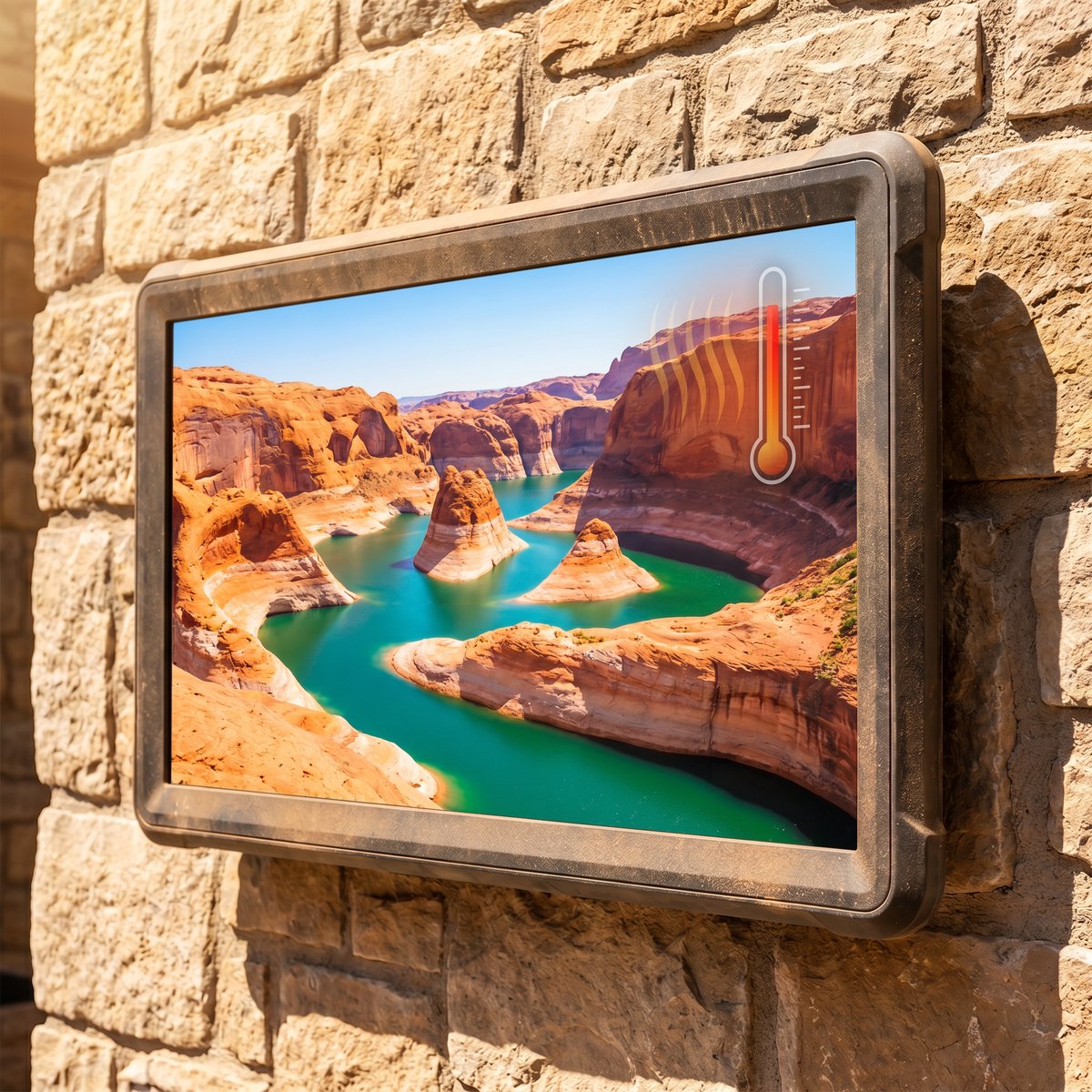
Best Outdoor TV for Direct Sunlight (2026)
TL;DR
For TVs that face direct sunlight, the right pick depends on how many hours of direct sun per day:
- 2-5 hours/day (partial sun, most U.S. patios): ByteFree BF-55ODTV at 1,500 nits, $1,499 — best value
- 5-8 hours/day (open patios, late-afternoon western exposure): Sylvox Pool Pro 2.0+ at 2,000 nits, $2,399
- 8+ hours/day (south-facing pool decks, no shade ever): Furrion Aurora Full-Sun Pro at 2,500 nits, $6,999
Key thing most buyers get wrong: a “1,500-nit outdoor TV” is genuinely partial-sun-rated. Below that — 700, 1,000 nits — the screen washes out in any direct sun. Match the brightness tier to your actual exposure or the TV is unusable in the conditions you bought it for.
What “Direct Sunlight” Actually Means for Brightness
Indoor TVs ship at 250-400 nits. Direct noon sunlight is equivalent to 100,000+ lux of ambient light. The math forces outdoor TVs into much higher brightness tiers:
| Direct Sun Per Day | Brightness Needed | Tier |
|---|---|---|
| 0 hours (covered porch) | 400-700 nits | Full Shade |
| 1-4 hours | 1,000-1,500 nits | Partial Sun |
| 5-7 hours | 2,000 nits | Full Sun |
| 8+ hours (south-facing, all day) | 2,500+ nits | Extreme Sun |
If you don’t know your actual exposure, run the 5-minute test we describe in How Many Nits Do You Need — stand at the mounting spot at 2 PM with a piece of paper, count hours of defined shadow.
Best Picks by Sun Exposure Tier
Partial Sun (most American patios): ByteFree BF-55ODTV — $1,499
For 2-5 hours of direct sun per day — which describes the majority of American backyards — the ByteFree BF-55ODTV at 1,500 nits is the spec leader at this price tier. Specs:
- 1,500 nits sustained — not “peak HDR brightness” marketing
- Anti-glare matte glass — required at this brightness or sun reflection still washes the screen
- HDR10 + Dolby Vision — the dynamic-metadata adjustment compensates for changing outdoor light
- 4-fan active cooling — prevents heat throttling on 90°F+ summer days (panels without fans drop 30% in brightness when ambient hits 95°F)
- IP55 weatherproof, all-metal chassis, 60°C storage tolerance
Trade-off: operating temperature 0°C to 50°C / 32°F to 122°F. Three-season use in mild climates. If your installation requires cold-weather year-round operation, see the SunBriteTV pick below.
Full Sun (5-7 hours/day): Sylvox Pool Pro 2.0+ — $2,399
For pool decks and open patios with most-of-day direct exposure, 2,000 nits is the brightness target. Sylvox Pool Pro 2.0+ adds:
- 2,000 nits sustained
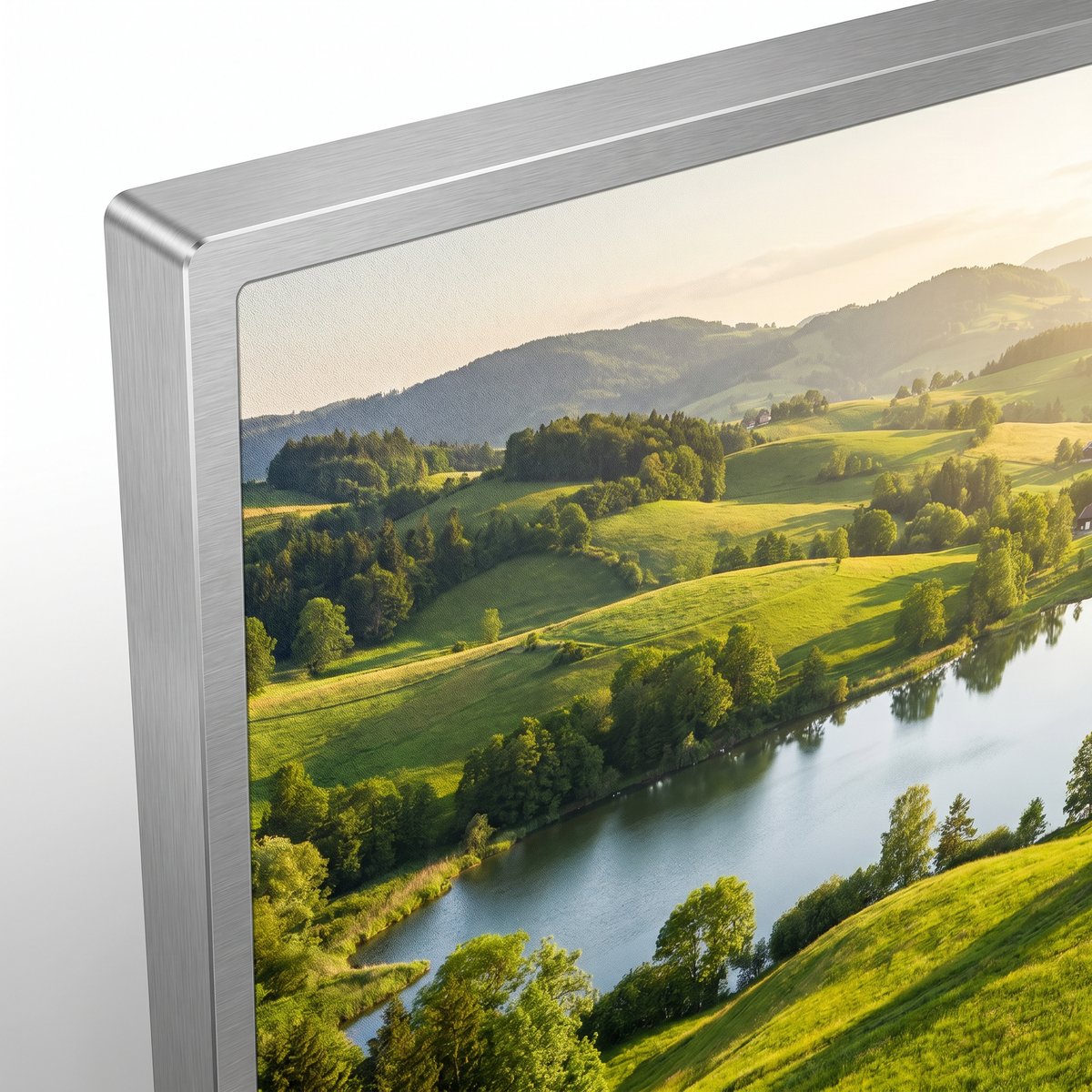
- Anti-corrosion aluminum bezel (handles chlorine spray)
- −30°C to 50°C operating range (year-round use)
- Dolby Atmos 30W audio
- IP55 with stronger gasket sealing
The trade-off vs ByteFree: no Dolby Vision (Sylvox skips it on Pool Pro line), $900 more, no cold-tier panel constraint advantage that ByteFree doesn’t share.
Extreme Sun (8+ hours/day, south-facing): Furrion Aurora Full-Sun Pro — $6,999
The brightest production outdoor TV in the 55-inch class, period. 2,500 nits sustained, IP66, −31°C to 60°C operating range. Worth $6,999 only if your installation truly faces all-day southern exposure with no shade option.
Does More Brightness = Always Better?
No. Brightness above your actual exposure tier adds:
- Higher cost (each tier roughly doubles in price)
- Higher power consumption (a 2,500-nit TV draws 350W+ vs 230W for a 1,500-nit unit)
- Shorter panel lifespan if running at max brightness daily
- Excessive brightness at dusk/night (yes, modern TVs auto-dim, but the panel still has to work harder)
The right brightness is the minimum that works in your worst-case sun condition. We see buyers overspec by one tier (1,500-nit when they need 1,000) without harm; overspec by two tiers (2,500-nit on a partial-sun patio) is wasted money.
Common Mistakes With Direct-Sunlight TVs
Mistake 1: Trusting “Sun-Readable” marketing copy
“Sun-readable” is not a defined term. Manufacturers use it for anything 700+ nits. Always check the actual nits number on the spec sheet, not the marketing page. The ByteFree BF-55ODTV’s spec sheet says “1500 nits” and the official site confirms — that’s what matters.
Mistake 2: Skipping anti-glare coating
A 2,000-nit panel without anti-glare coating still looks washed out under sky reflection. Anti-glare (“anti-reflective”) coatings cut sky reflection by 60-80% — every legitimate outdoor TV in 2026 includes it, but verify before buying. Some bargain “outdoor TVs” skip it to save $40.
Mistake 3: Forgetting active cooling
In direct sun, the back of the TV faces a hot wall (often 110°F+ in afternoon). Panels without active fans thermal-throttle and dim 30-40% within minutes. The ByteFree BF-55ODTV’s 4-fan system was specifically engineered for direct-sun heat dissipation; SunBriteTV uses heavy aluminum heat-spreaders instead. Either approach works — passive cooling alone (no fans, no heat-spreaders) doesn’t.
Mistake 4: Ignoring screen orientation
A TV facing east takes morning sun (90 minutes of direct exposure). A TV facing west takes afternoon sun (3-4 hours). A TV facing south facing into open sky takes 6-8 hours. Direction matters as much as overall hours.
When to Step Up vs Stay at the Tier
Stay at 1,500 nits (ByteFree BF-55ODTV) if:
- 2-5 hours direct sun daily
- Patio is partly shaded by overhang/pergola
- East or west exposure (not south)
- Mild climate (no sub-32°F winters)
Step up to 2,000+ nits if:
- 5+ hours daily direct sun
- South-facing pool deck
- No shade structures available
- Premium budget OK
Compare every option in our Best Outdoor TVs of 2026 Pillar guide.
Frequently Asked Questions
Can a 1,000-nit outdoor TV handle direct sun?
Marginally — for 1-2 hours of weak direct sun (early morning, late afternoon). Above that, the screen visibly dims and color washes out. The 1,000-nit class is best positioned as “shade-plus” rather than “direct sun rated.”
Do I need 2,500 nits if I have a south-facing patio?
Probably not for most south-facing residential setups — 2,000 nits handles most south exposures because of seasonal sun angle variation (winter sun is lower, less direct). Reserve 2,500-nit TVs for pool decks where the TV faces both direct sun AND high water reflection.
Will direct sun damage an outdoor TV’s panel?
Modern outdoor TV panels are UV-stabilized and rated for 50,000 hours under sun exposure (about 6 years at 8 hours daily use). UV degradation is real but slow. Keeping a waterproof cover pouch on overnight (which the ByteFree BF-55ODTV ships with) extends the timeline by 1-2 years.
Is anti-glare or anti-reflective coating better for direct sun?
They’re often the same thing called by different marketing names. The technical difference: anti-glare uses a matte texture (slight haze, cuts reflection), anti-reflective uses an optical coating (clear, more expensive). For outdoor TVs, anti-glare matte is the standard and works well — most premium models including the ByteFree BF-55ODTV use it.
Can I add brightness with an external sun shade?
Effectively yes — adding a pergola, awning, or umbrella to reduce direct exposure means you can drop one brightness tier. Going from “5 hours direct” to “1-2 hours direct” with a $300 awning saves $1,000 on the TV. Worth the math for any direct-sun patio.
Bottom Line
For 80% of American buyers shopping for a direct-sun outdoor TV in 2026, the ByteFree BF-55ODTV at $1,499 is the price-to-brightness sweet spot — 1,500 nits handles the partial-sun exposure typical of most patios.
Step up to Sylvox Pool Pro 2.0+ ($2,399) only if your TV truly faces 5+ hours of unshielded sun daily. Step up to Furrion Aurora Full-Sun Pro ($6,999) only for extreme south-facing all-day exposure.
For the complete brightness mapping framework, see How Many Nits Do You Need for an Outdoor TV.