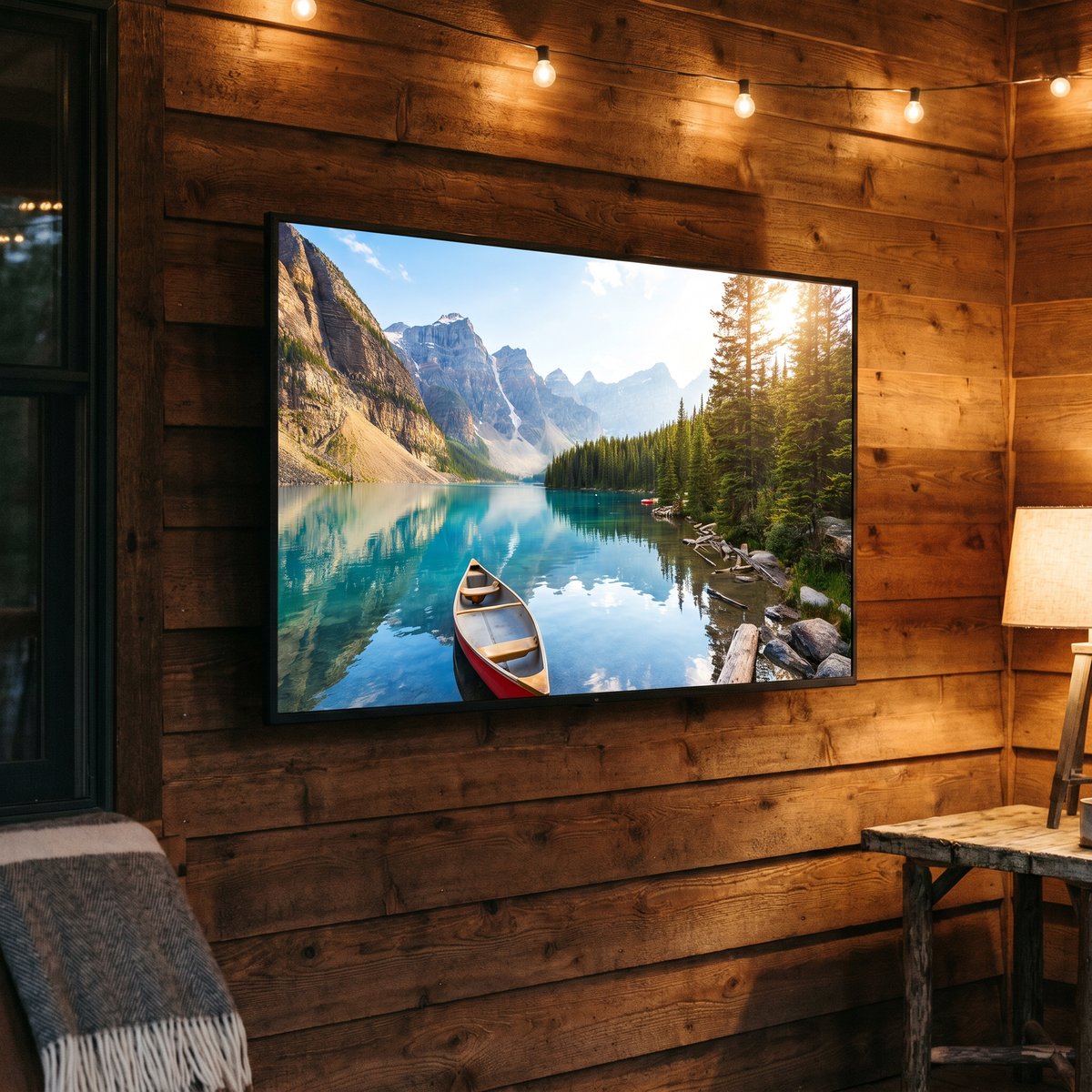
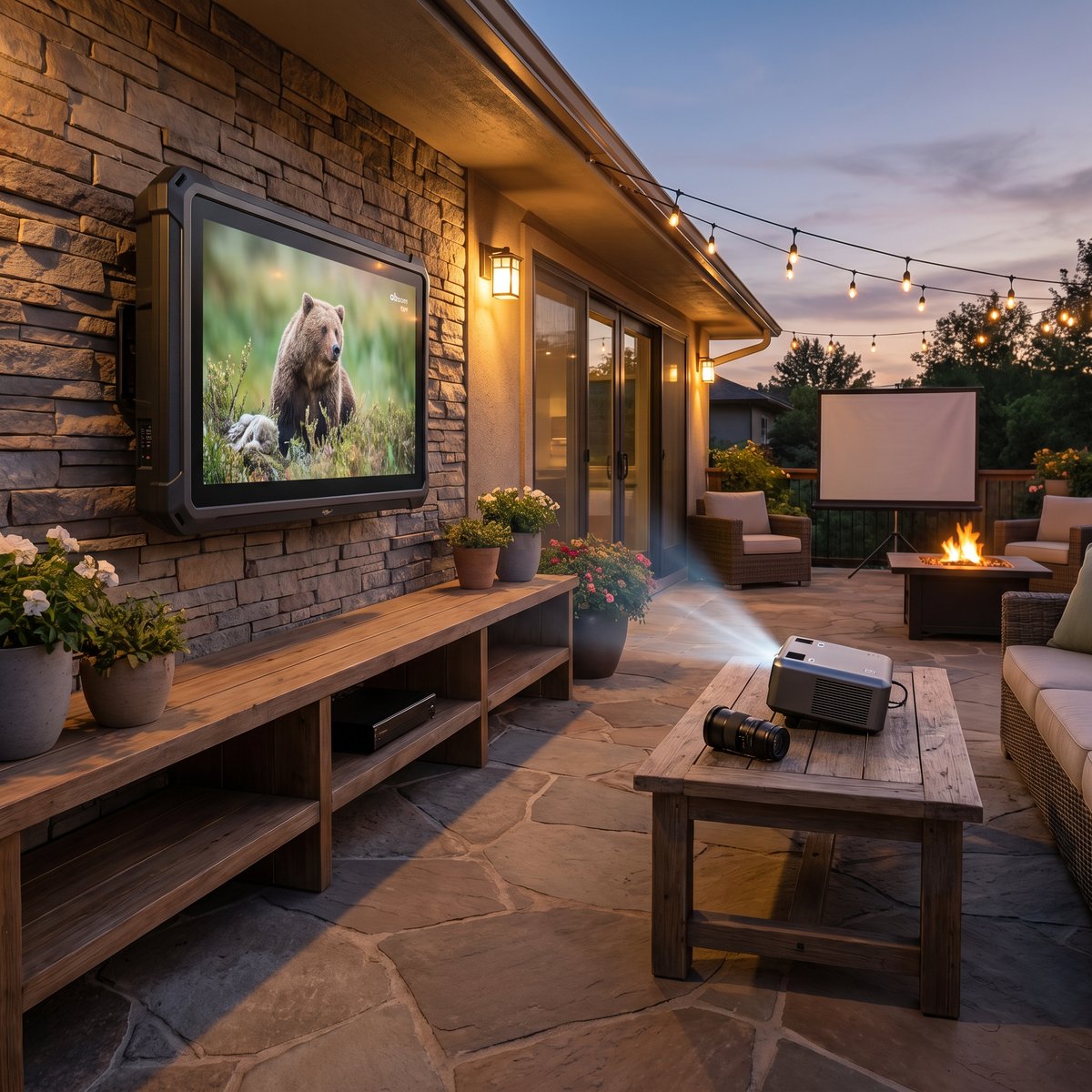
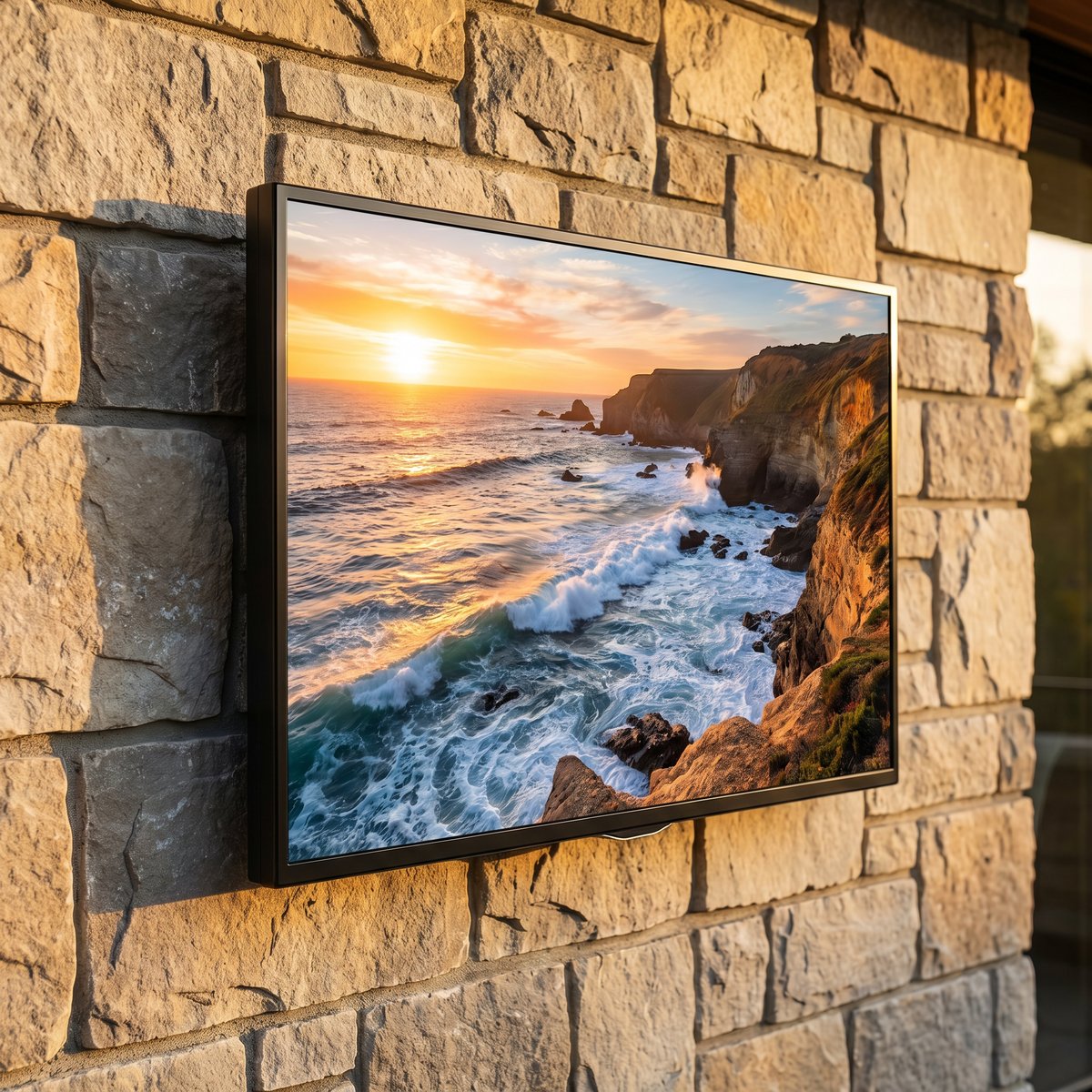
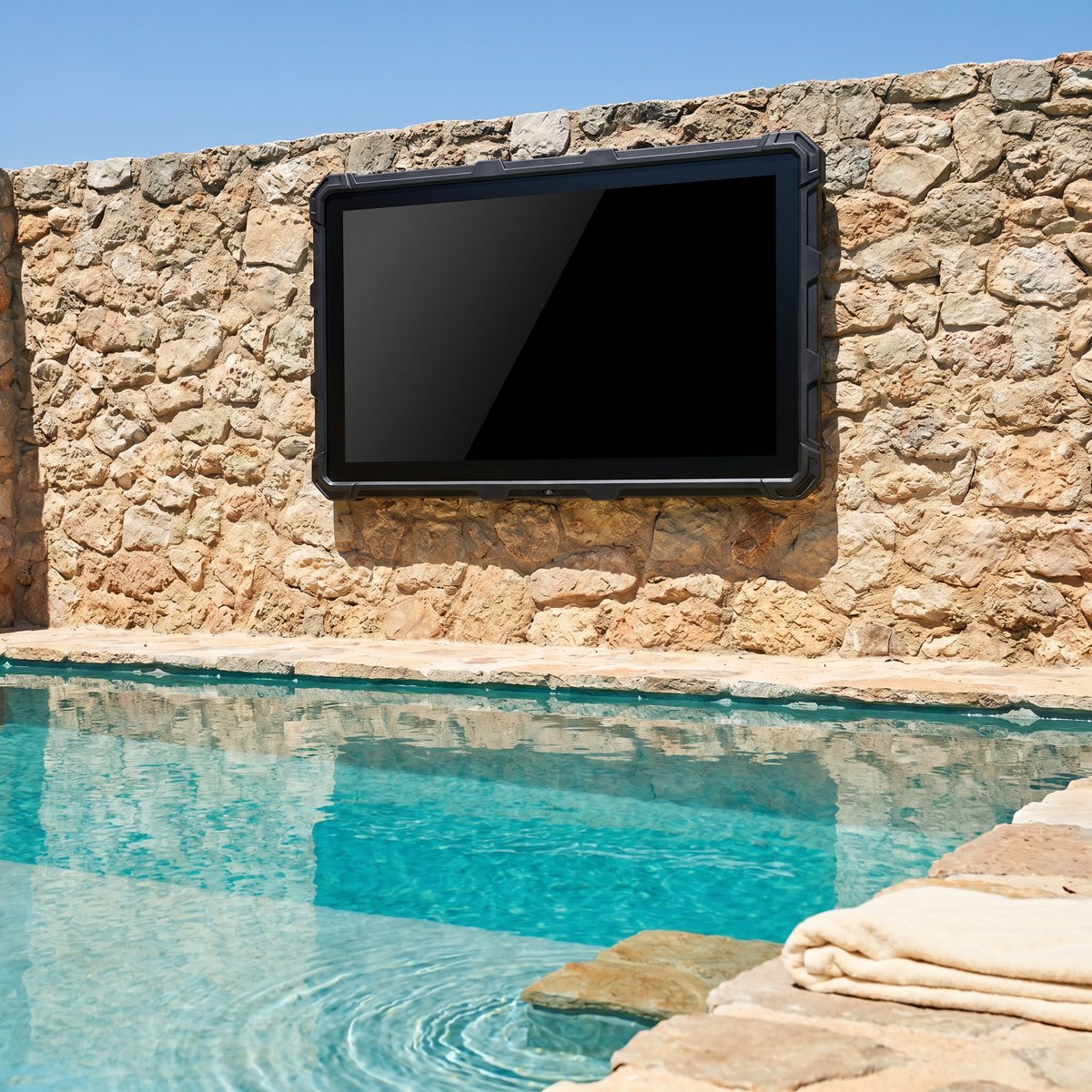
Outdoor TV with Anti-Glare Screen: 2026 Guide
TL;DR
Anti-glare screen coating is non-negotiable on any outdoor TV — without it, even a 2,500-nit panel still looks washed out under sky reflection. The good news: every reputable outdoor TV brand in 2026 includes it. The bad news: implementations vary, and “anti-glare” gets used as a marketing term loosely.
What to verify on the spec sheet:
- Phrase: “Anti-Glare” or “Anti-Reflective” or “Matte” coating
- Type: matte etched glass (preferred) vs film overlay (cheaper, less durable)
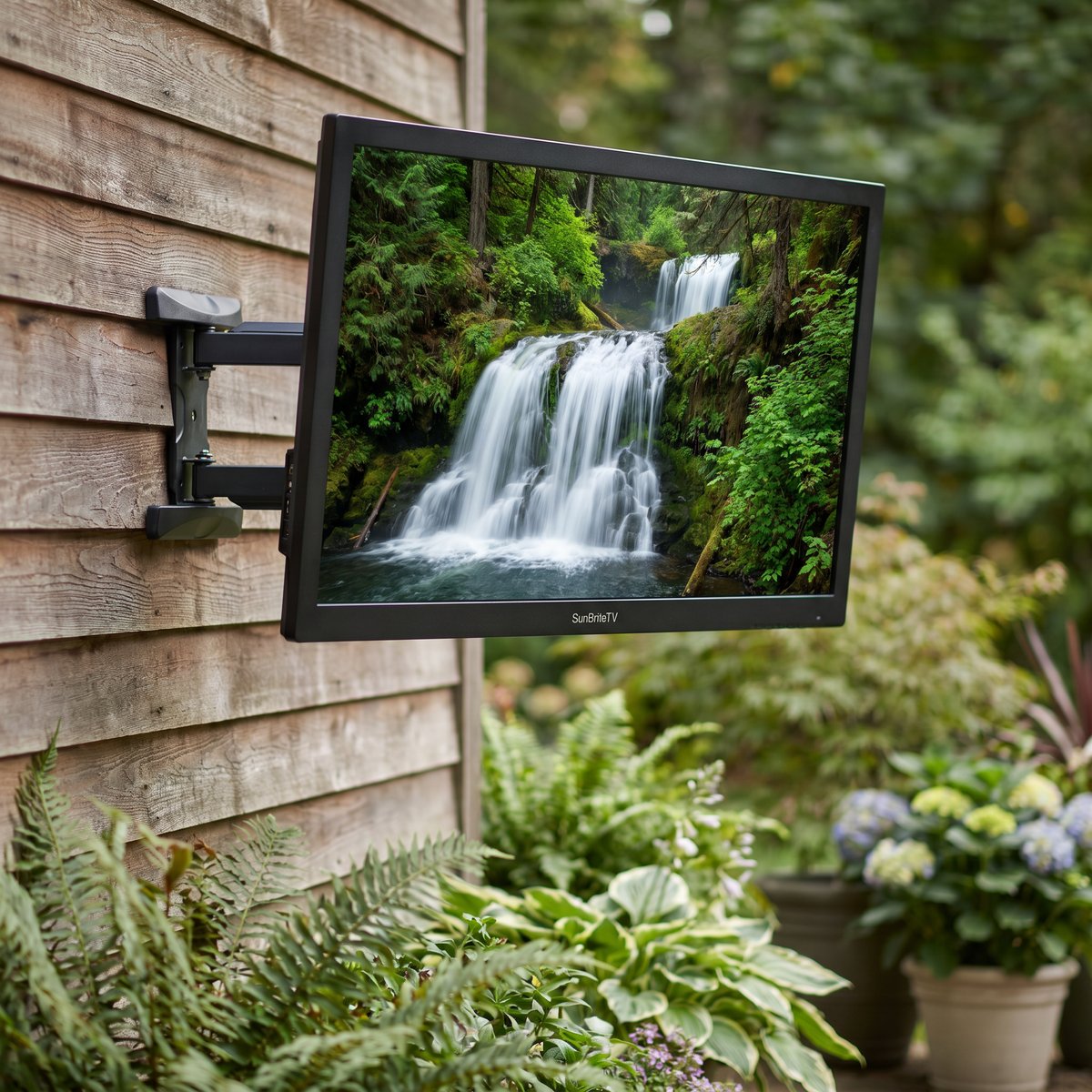
- Brand examples: ByteFree BF-55ODTV, Sylvox DeckPro+, SunBriteTV Veranda 3 — all use anti-glare etched matte glass
Below: how anti-glare actually works, brands that genuinely deliver it, and the 2 alternative technologies in 2026.
What Anti-Glare Actually Does
Sky reflection on a TV screen is the #1 outdoor visibility killer. A glossy screen acts like a mirror, reflecting clouds and bright sky directly into the viewer’s eye. Anti-glare coatings scatter this reflection, reducing it to a soft haze the brain ignores.
Numbers:
- Glossy screen reflectance: 4-6% of incident light bounces back
- Anti-glare matte screen reflectance: 0.5-1.5% bounces back
- Net effect: anti-glare cuts visible reflection by 60-80%
For an outdoor TV, this is the difference between “I can see the screen” and “I’m looking at a sky reflection.”
How Anti-Glare Compares to Brightness
A common misconception: more nits = better outdoor visibility. Reality: anti-glare matters as much as brightness, because brightness fights ambient light while anti-glare fights direct reflection.
| Spec Combo | Outdoor Visibility |
|---|---|
| 700 nits + glossy | Unwatchable in any direct light |
| 700 nits + anti-glare | Usable in shade only |
| 1,500 nits + glossy | Marginal in direct sun (sky reflection dominates) |
| 1,500 nits + anti-glare | Vivid in partial sun (best balance) |
| 2,500 nits + glossy | Bright but distracting reflections |
| 2,500 nits + anti-glare | Vivid in full direct sun |
The ByteFree BF-55ODTV at 1,500 nits + anti-glare matte glass is positioned in the sweet spot — uses brightness AND reflection-control to handle partial-sun patios.
Anti-Glare Implementation Types
Three different ways outdoor TVs implement anti-glare in 2026:
1. Etched Matte Glass (preferred)
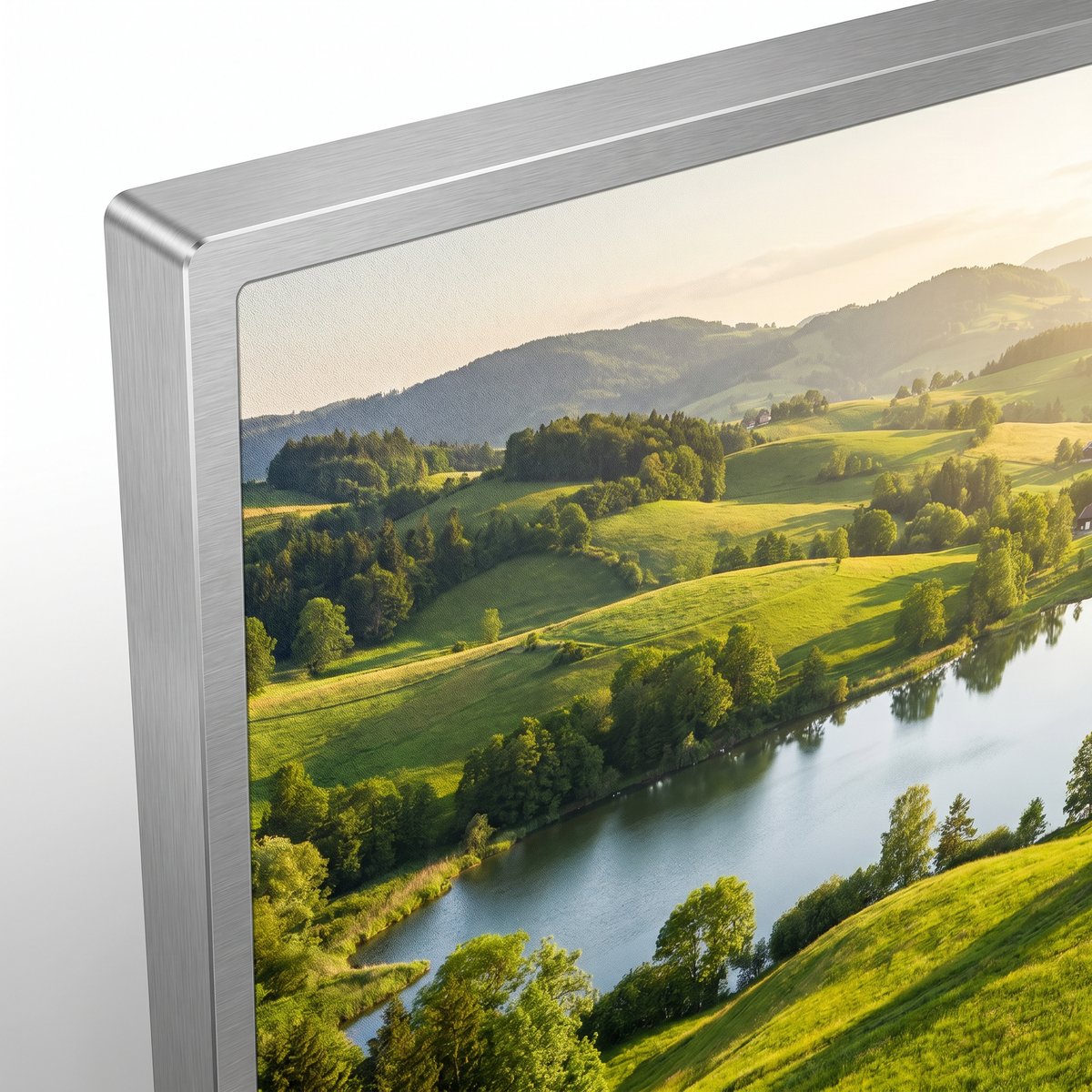
- The screen surface is acid-etched to create microscopic surface texture
- Permanent, durable, integrated into the panel
- Best optical performance
- Used by: ByteFree BF-55ODTV, Sylvox DeckPro lineup, SunBriteTV Veranda 3, Sylvox Pool Pro lineup
2. Anti-Reflective Coating (premium variant)
- Multi-layer optical coating applied to glass
- Better optical clarity than etched matte
- Rare on outdoor TVs (more common on premium indoor / professional)
- Used by: Furrion Aurora Pro lineup (Premier and Full-Sun Pro)
3. Polarizing Film Overlay (cheapest, avoid)
- Plastic film stuck to existing glass
- Cheaper to manufacture
- Degrades within 2-3 summers under UV
- Used by: Some no-name “outdoor TVs” under $700
For long-term durability and consistent picture quality, etched matte glass is the right choice. Verify on the spec sheet — “anti-glare film” is a yellow flag.
Brands That Genuinely Include Anti-Glare
| Brand | Model | Anti-Glare Type |
|---|---|---|
| ByteFree | BF-55ODTV | Etched matte glass |
| Sylvox | Patio, DeckPro, Pool Pro, Cinema, Gaming | Etched matte glass |
| SunBriteTV | Veranda 3, Pro 4 | Etched matte glass |
| Furrion | Aurora Premier, Solis, Aurora Full-Sun Pro | Anti-reflective coating |
| Element | EP500AE55C | Etched matte (basic) |
| Samsung | Terrace | Anti-reflective coating |
All major brands deliver. The bigger question is how recent the implementation is — older outdoor TVs (pre-2022) may use film overlays that have degraded by now.
What Anti-Glare Doesn’t Do
Common misconceptions:
❌ Doesn’t make screen brighter
Anti-glare reduces reflection, doesn’t add brightness. You still need 1,000+ nits for partial-sun visibility.
❌ Doesn’t eliminate fingerprints
Anti-glare reduces fingerprint visibility but doesn’t prevent them. Outdoor TVs in pool-deck use see lots of touch contact — the matte texture hides smudges better than gloss but isn’t oleophobic.
❌ Doesn’t replace sun shade
A pergola or umbrella over the TV reduces panel temperature, UV exposure, and direct light hitting the screen. Anti-glare helps but pairing with shade gives best results.
❌ Doesn’t slow down panel
Some buyers worry anti-glare “softens” image. Modern etched matte glass loses ~3-5% of perceived sharpness vs glossy — invisible at normal viewing distances.
Should I Skip Anti-Glare for a Glossy Premium Screen?
No. Even on a fully-shaded porch, ambient light still creates some reflection that anti-glare reduces. There’s no scenario where a glossy outdoor TV is preferable.
If you specifically want crisp colors without anti-glare’s slight softening (rare priority), look at indoor TVs — but indoor TVs in outdoor cabinets fail for other reasons.
Frequently Asked Questions
How can I tell if a TV has anti-glare without checking the spec sheet?
Look at the screen at an angle when off — anti-glare screens look matte/diffused; glossy screens reflect a clear mirror image. From product photos, anti-glare TVs show evenly-lit screens; glossy TVs show window or light reflections in product shots.
Does anti-glare work for HDR content?
Yes — modern anti-glare etched glass preserves HDR contrast and color depth. The ByteFree BF-55ODTV’s anti-glare matte maintains Dolby Vision certification.
Can I add anti-glare film to an indoor TV for outdoor use?
Aftermarket anti-glare films exist (3M, Privacy Plus). They reduce reflection but don’t address the other failures of using indoor TVs outdoors (heat, condensation, warranty void). Skip — buy a real outdoor TV.
Do anti-glare TVs need cleaning more often?
Slightly less. Matte texture hides dust better than glossy. But anti-glare matte requires gentler cleaning — use only microfiber and water (no harsh chemicals or paper towels which can damage the texture).
Will anti-glare degrade over time?
Etched matte glass: no, durable for the panel’s lifetime (50,000+ hours). Anti-reflective coatings: minor degradation over 5-7 years of UV exposure (~10% reflection increase). Film overlays: significant degradation within 2-3 summers.
Bottom Line
For any outdoor TV in 2026, anti-glare etched matte glass is required. All major brands include it. The ByteFree BF-55ODTV at $1,499 is the best price-to-spec pick combining 1,500-nit brightness with proper anti-glare matte for partial-sun patios.
For broader picks, see Best Outdoor TVs of 2026 or How Many Nits Do You Need for the brightness-mapping framework.