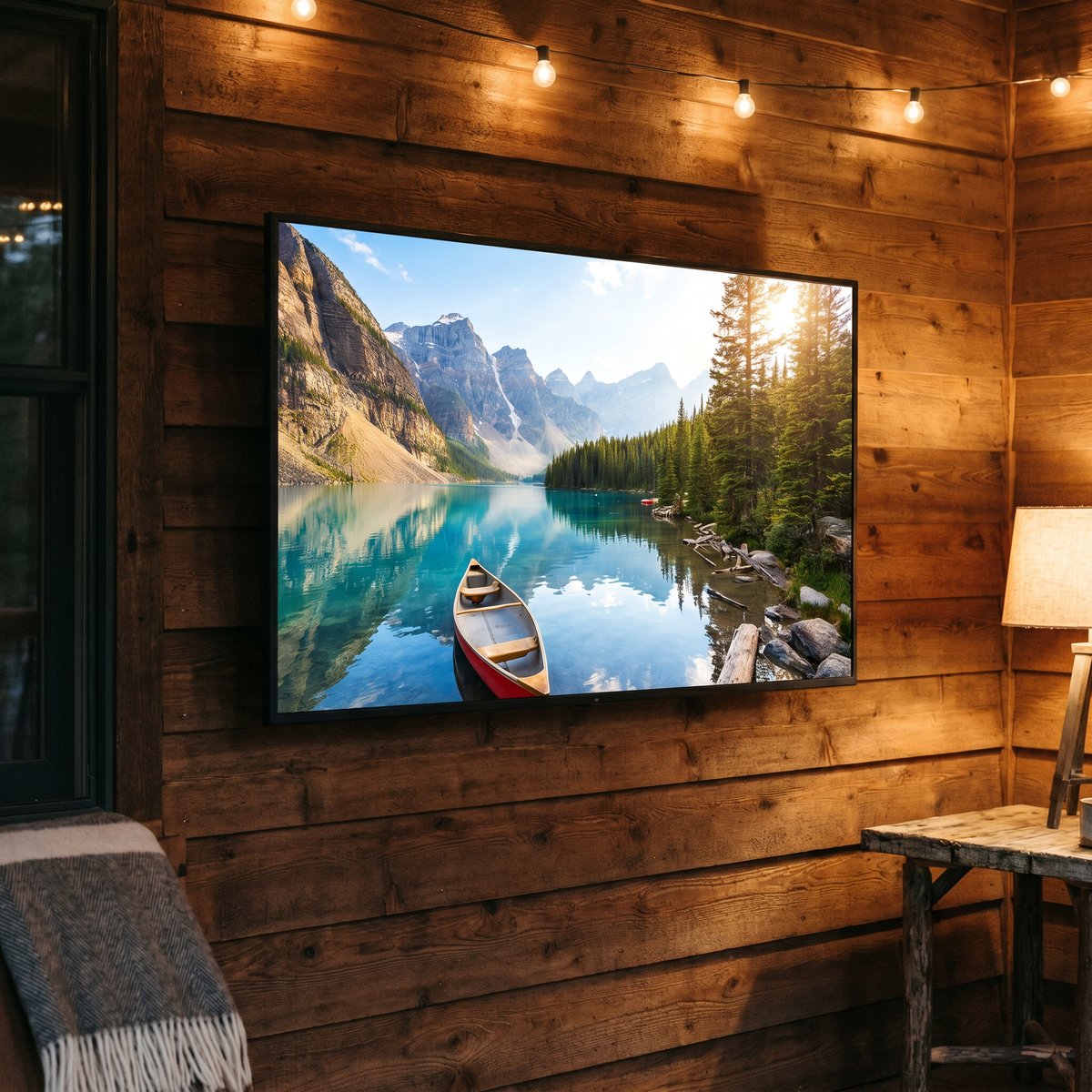
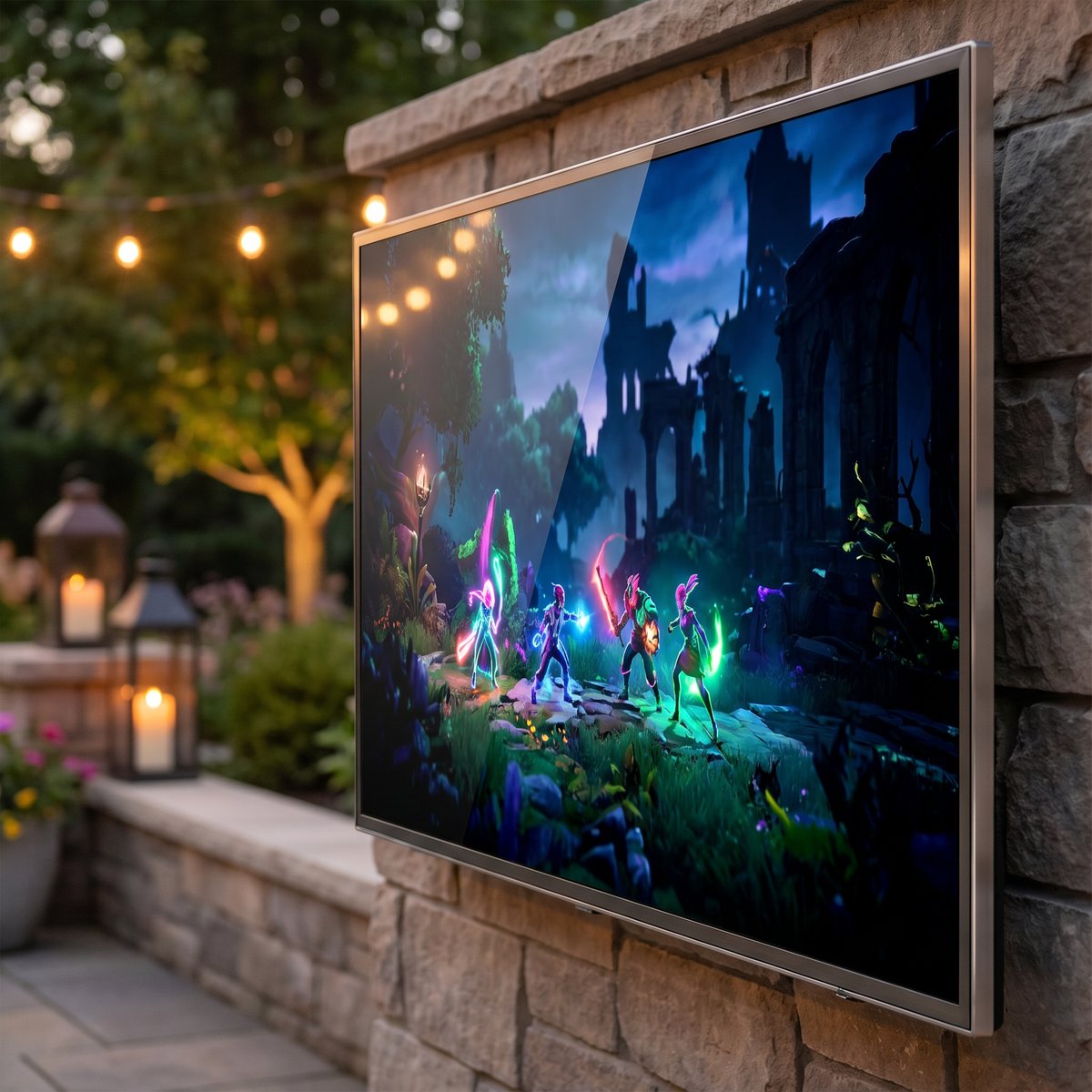
Outdoor TV Cabinet vs Real Outdoor TV: 5-Year Cost Math
TL;DR
The “buy a $400 indoor TV + $250 weatherproof cabinet” approach looks $850 cheaper at checkout. Over 5 years, the math reverses — indoor TVs in cabinets fail every 18 months on average, requiring 3 replacements + 12 hours of reinstall labor.
5-year total cost:
- Indoor TV + cabinet path: ~$1,970 (3 TV replacements + cabinet + mounting)
- Real outdoor TV path (ByteFree BF-55ODTV): ~$1,619 (one-time install)
Plus the indoor-cabinet path produces 120 lbs of e-waste and voids your warranty from day 1.
Below: the 4 failure modes, the math, and the 2 edge cases where cabinets actually work.
The Marketing Pitch (and Why It’s Wrong)
Outdoor TV cabinet sellers position the value as: “save $1,000 by using your existing TV outside.” The cabinet is sold as a weatherproof enclosure with cooling vents and screen-protective acrylic. Sounds smart.
In practice, three things happen that the marketing doesn’t mention.
The 4 Failure Modes
1. Condensation (most common, 50%+ of failures)
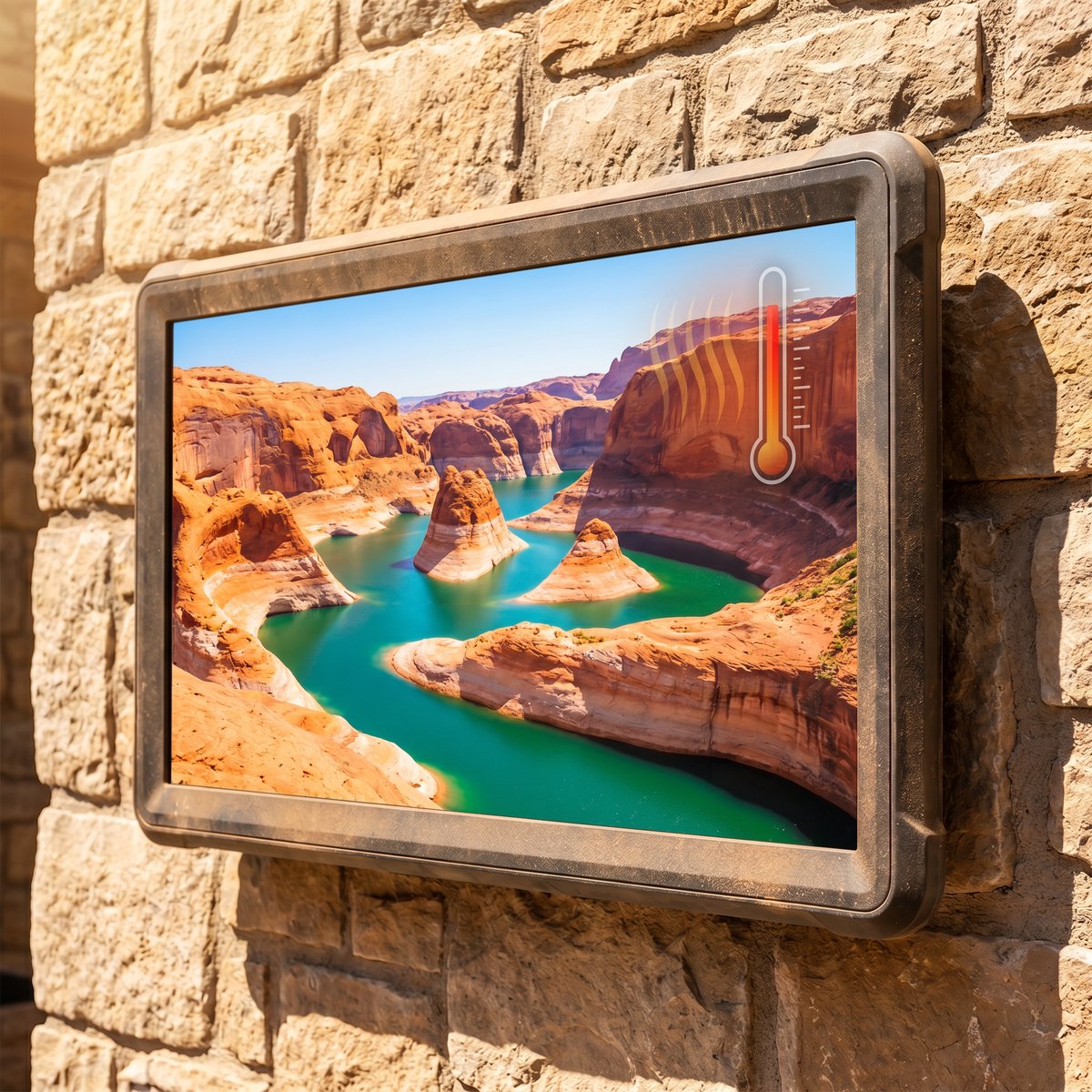
Outdoor temperature swings from 60°F at 5 AM to 90°F at 2 PM. A sealed cabinet retains daytime heat then cools at night. As the cabinet cools, warm humid air reaches its dew point and water condenses on every internal surface — including your TV’s main board.
Symptoms appear month 3-6:
- TV powers on then resets randomly
- Vertical lines or color blocks on the screen
- Total power-on failure
Vented cabinets reduce but don’t eliminate this. Real outdoor TVs use internal sealing + active cooling — the ByteFree BF-55ODTV uses 4 fans to keep electronics at constant temperature and humidity.
2. Heat Death (25% of failures)
Indoor TVs are designed for 20-25°C ambient with passive convection cooling. Inside an outdoor cabinet at 2 PM:
- Cabinet interior hits 115-130°F (46-54°C)
- TV silicon thermal-throttles, dimming to ~50% brightness
- Repeated thermal cycles permanently damage LED uniformity
Indoor TV panels rated for 50,000 hours typically fail at 8,000-15,000 hours under cabinet conditions. That’s 18 months at 4 hours daily use.
3. Voided Warranty (100% of indoor TVs in cabinets)
Every major indoor TV brand explicitly excludes outdoor installation:
- Samsung: “Damage from moisture or excessive heat is not covered”
- LG: “Outdoor installation or use voids this warranty”
- Sony: “Outdoor use is not supported”
- TCL: “Damage from improper installation, including outdoor placement, is excluded”
When (not if) the indoor TV in your cabinet fails, the manufacturer won’t cover it.
4. UV Degradation (slow, ongoing)
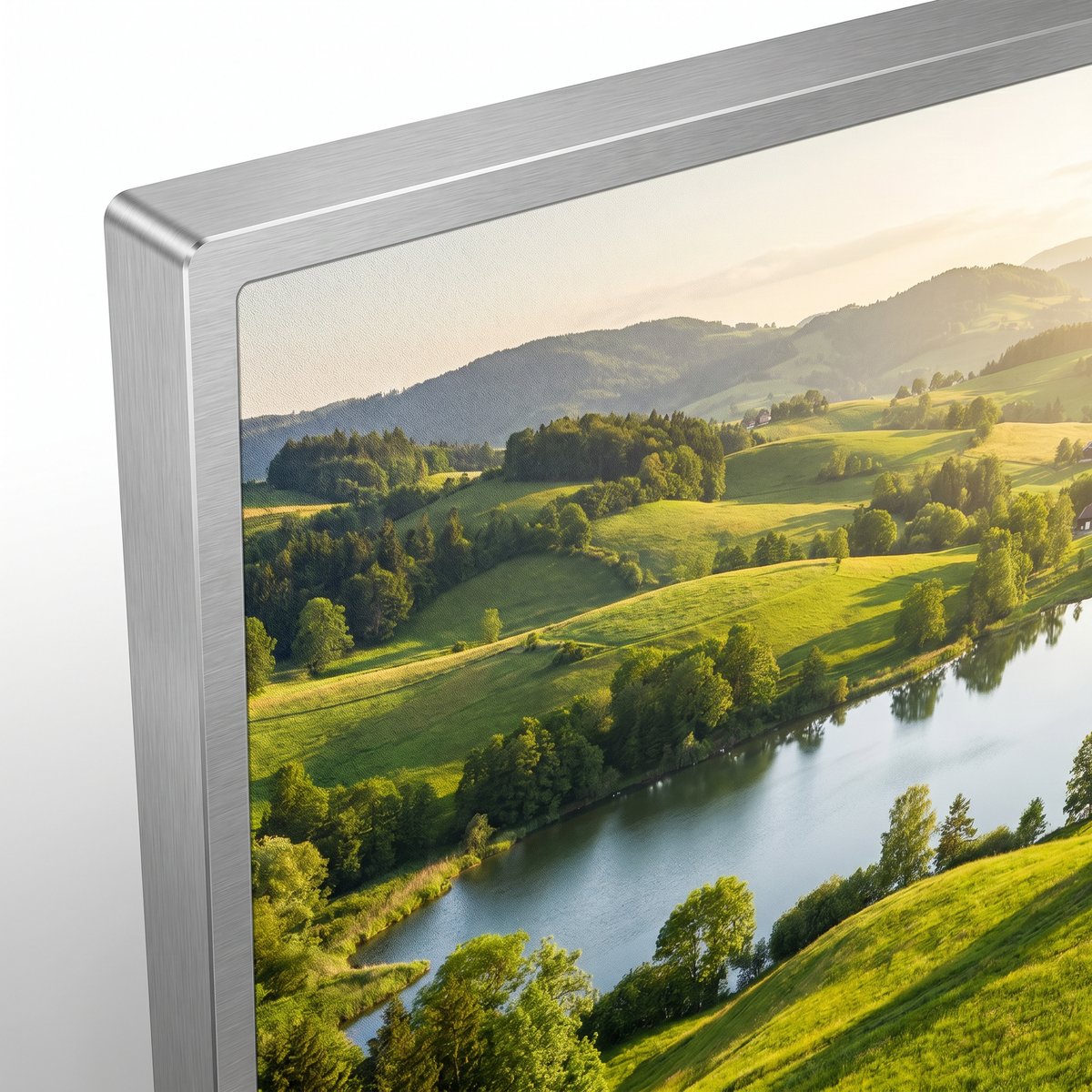
Anti-glare coatings on indoor TVs yellow within 2-3 summers under direct or filtered sun. Plastic bezels warp, IR sensors degrade. Real outdoor TVs use UV-stabilized polymers and tempered glass — engineering that costs $80-120 per TV at production.
The 5-Year Cost Math
Realistic ownership costs over 5 years:
| Cost Item | Indoor TV + Cabinet | ByteFree BF-55ODTV |
|---|---|---|
| Year 0 — TV (mid-range 55”) | $400 | $1,499 |
| Year 0 — Weatherproof cabinet | $250 | $0 (TV is the enclosure) |
| Year 0 — Mounting hardware | $80 | $80 |
| Year 0 — Outdoor surge protector | $40 | $40 |
| Year 0 subtotal | $770 | $1,619 |
| Year 1.5 — Replacement TV (avg failure point) | $400 | — |
| Year 3 — Replacement TV | $400 | — |
| Year 4.5 — Replacement TV | $400 | — |
| Cabinet refresh (year 4 — gaskets degrade) | $80 | — |
| 5-year total | $2,050 | $1,619 |
The indoor-cabinet path costs $431 more AND requires:
- 3× TV replacement labor (about 3 hours each = 9 hours of your weekend time)
- Disposing of 3 broken TVs (~120 lbs of e-waste)
- Repeated periods without a working TV during failure → replacement → install cycles
When the Cabinet Approach Actually Works
Three specific scenarios make the math change:
1. Climate-Controlled “Outdoor Room”
A screened-in three-season room with a heater, dehumidifier, and AC isn’t really “outside.” A regular indoor TV is fine here — no cabinet needed.
2. Detached Garage / Shed (Ventilated, Mounted High)
If the TV is inside a garage, never sees direct sun or rain, and the garage stays above 50°F in winter, an indoor TV is OK. This is “indoor TV in an outbuilding” — the cabinet adds nothing.
3. Renting / Short-Term (Under 1 Year)
If you’re renting and using the patio TV one season before moving, the math equalizes at one year. A $400 indoor TV in a $250 covered cabinet for 9 months is acceptable, knowing it’s disposable.
For everyone else with permanent installations, buy outdoor-rated.
What If I Already Have an Outdoor TV Cabinet?
If you bought a cabinet and want to maximize the use:
- Use it for storage of indoor electronics (Apple TV, Roku) rather than the TV itself
- Pair it with a real outdoor TV — the ByteFree BF-55ODTV doesn’t need a cabinet but the cabinet adds extra UV protection and reduces dust ingress
- Sell on the secondary market — outdoor TV cabinets retain ~50% of MSRP if in good condition
What to Buy Instead
Match the outdoor TV to your patio’s sun exposure (full guide in How Many Nits Do You Need):
| Sun Exposure | Recommended Outdoor TV |
|---|---|
| Full shade | Sylvox Patio (700 nits, $1,199) |
| Partial sun (most patios) | ByteFree BF-55ODTV (1,500 nits, $1,499) |
| Full sun all day | Sylvox Pool Pro 2.0+ (2,000 nits, $2,399) |
Compare full picks in Best Outdoor TVs of 2026.
Frequently Asked Questions
Aren’t there premium outdoor cabinets that solve heat/humidity?
The Storm Shell, Apollo, and TVCover lines try with thermo-electric cooling and dehumidifier inserts. They run $600-$1,200 — at which point you’ve matched real outdoor TV pricing without the warranty support.
Can I retrofit my existing indoor TV with weather sealing?
Aftermarket weather-sealing kits exist but void warranty and rarely match factory IP55 testing. Not recommended.
What about new indoor TVs that claim “outdoor capable” without cabinet?
Read the fine print. Most are IP54 at best (splash-resistant, not water-jet-resistant per IP55) and have operating-temperature ranges that don’t match dedicated outdoor brands. Skip unless the spec sheet matches a real outdoor TV.
Is there a use case where cabinet + indoor TV beats outdoor TV?
Single-season vacation home where the TV is brought inside between visits. Indoor + portable cover pouches handle this. For permanent installation, real outdoor TV always wins long-term.
Does this analysis apply to outdoor projector setups too?
Yes, partially. Outdoor projectors face similar humidity issues but are typically stored indoors between uses, sidestepping the cabinet failure modes. See Outdoor TV vs Projector for that comparison.
Bottom Line
The “indoor TV in a cabinet” approach loses on every dimension that matters: cost, longevity, warranty, e-waste, and your time. Buy a purpose-built outdoor TV.
For most American buyers in 2026, the ByteFree BF-55ODTV at $1,499 is the cheapest path that actually works — wins on 5-year cost despite the higher upfront sticker.
For broader outdoor TV picks, see Best Outdoor TVs of 2026.